This is a repost of an article originally published in the Rutland Herald/Times ArgusWeekend Magazine on January 20, 2024.
For our ancestors, winter in rural Vermont was long and arduous. The short days were crammed full with laborious farm and house chores while the dark nights were long and filled with… not much. Maybe dreams of warmer days? And when the snow was too deep for even ox-pulled snow rollers to clear a path, it was not unheard of for some families to be housebound for days at a time.
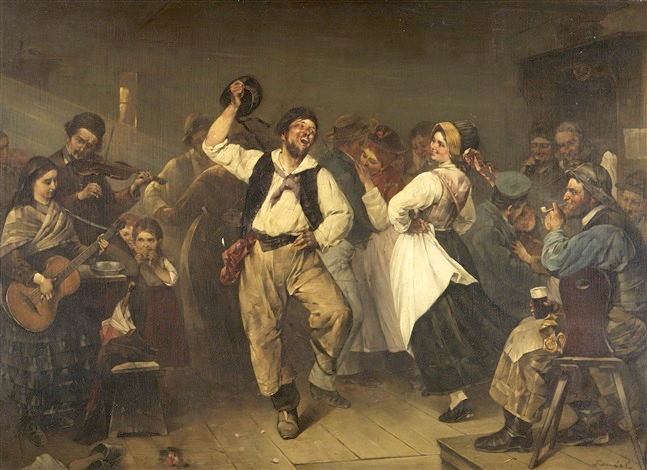
But Vermonters — many of whom were not long descended from the dance and music-loving English, Scottish, and Irish, or were newly settled French-Canadians — knew how to brighten the dark nights: With music. And more specifically, with a “kitchen junket” or “tunk.”
Over 100 years ago, the last person to be hanged in Vermont was a man convicted of a murder in Wallingford, Vermont. It was just one of a number of killings in the quaint New England town.
This is a repost of an article originally published in the Weekend Magazine on October 26, 2024.
Today, beautiful Wallingford, Vermont may be known to visitors for its historic architecture, its (sadly, recently vandalized) leaking boot boy statue, and the ice beds at White Rocks. But once, two hundred years ago, and again (and again, and again) one hundred years later, the small mountain-side Rutland County town made headlines for something only the most macabre tourist brochure would advertise: Murder.
This is a repost from my “Remember When” column first published in the Rutland Herald/Times Argus Weekend Magazine on May 27, 2023.
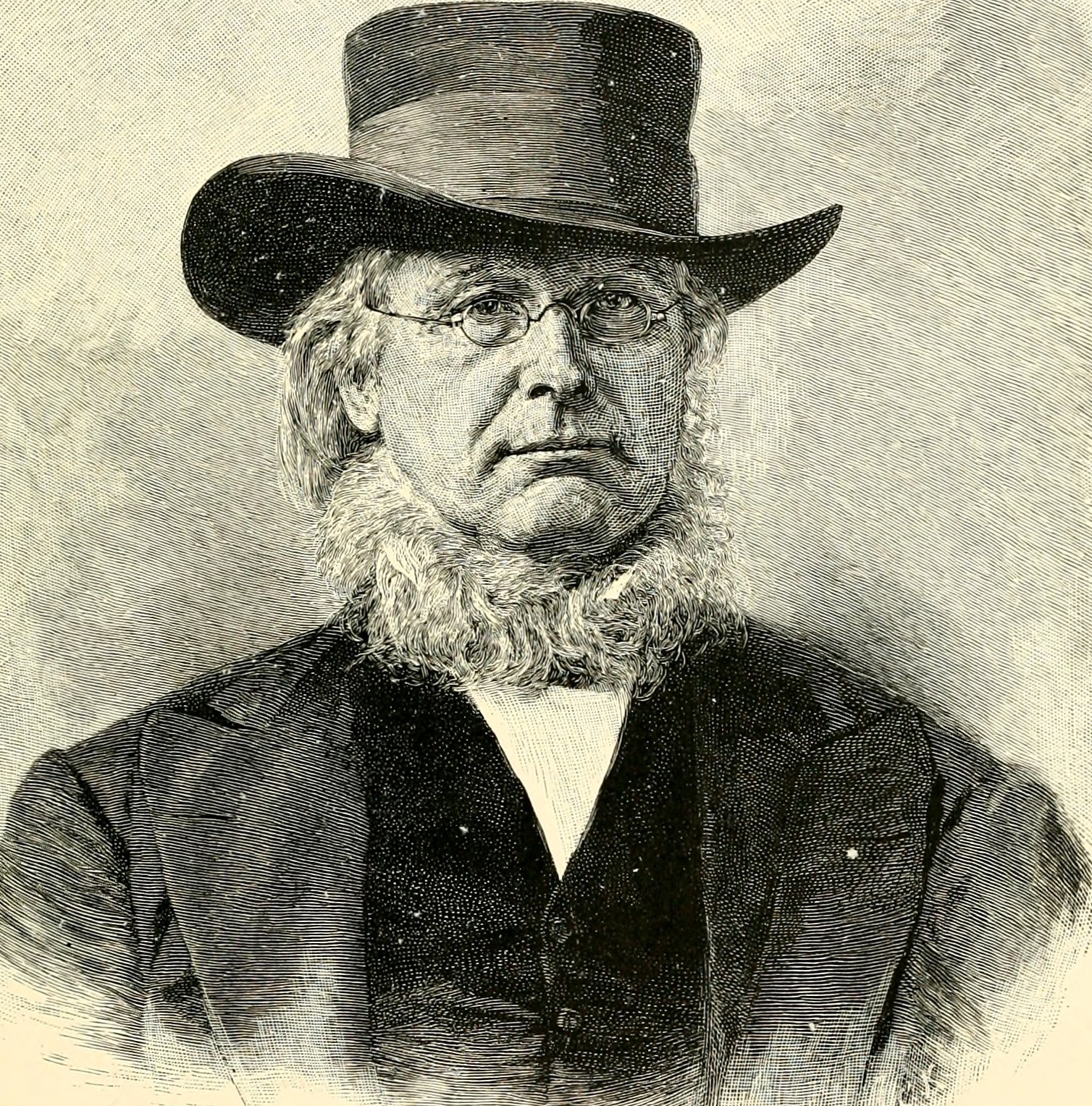
Horace Greeley may be remembered as the 1841 founder and editor of the New York Tribune. He may also be remembered as the Liberal Republican who, endorsed by the Democrats, lost his presidential bid against Ulysses Grant. Or as the man who gained the unfortunate distinction of being the only presidential candidate to die during the election process. Or maybe he will be remembered as the man who (allegedly) said, “Go West, young man!”
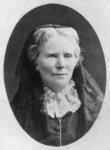
Whether Dr. Elizabeth Blackwell, the first woman to receive an MD, ever visited Vermont is uncertain; she most definitely never lived here. Ironically, Vermont’s role in Elizabeth’s career is something that didn’t happen: in 1847, she didn’t enroll at Castleton Medical School…
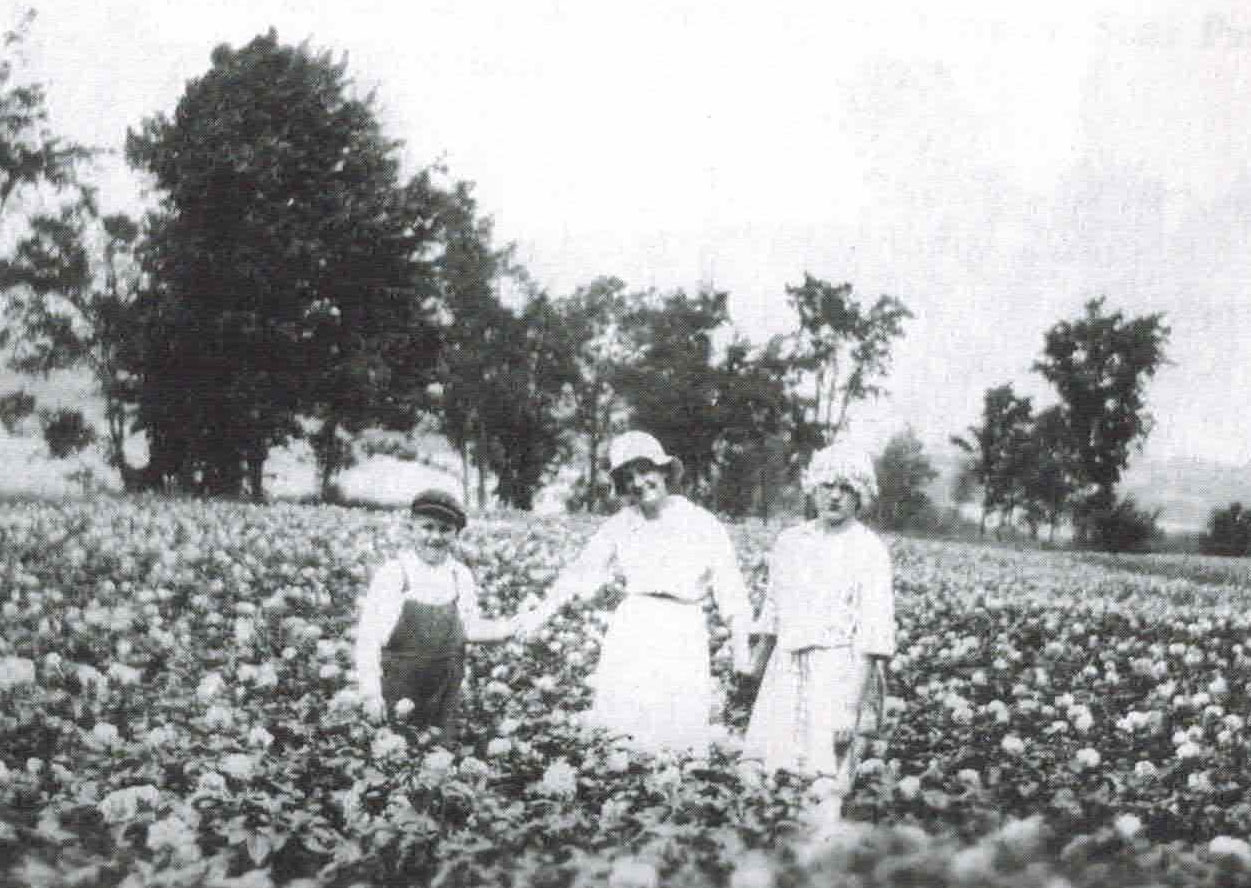
Castleton’s Poor Farm potato field, located where Crystal Beach is now on Lake Bomoseen), c. 1913. From Lake Bomoseen: The Story of Vermont’s Largest Little-Known Lake. Courtesy of Carol Thompson.
When Mrs. K. Lottie and her fourteen-year-old granddaughter were moved out of their cellar abode on Berlin Street, Montpelier, in February 1922, they didn’t go willingly. City officials, however, believed the two women would be better cared for on the town-managed poor farm on Elm Street.
As Mrs. Lottie and her granddaughter were moving into their new “home” forty miles away, William Seeley was setting himself free from his. The “straight as an arrow” 72-year-old was done with sleeping on a straw mattress in a building on Goodrich Road that used to house smallpox patients. Having “every inclination to work,” he went in search of a better life than the one he was living on Burlington’s poor farm. But soon Mr. Seeley found himself in jail – where “tramps and vagabonds” were often sent at the time – arrested for the crime of vagrancy. Suddenly, the poor farm may not have seemed so bad.
Originally published in the Times Argus/Rutland Herald Weekend Magazine, December 24, 2022 for the “Remember When” column with the title,When Holidays Were a Ball
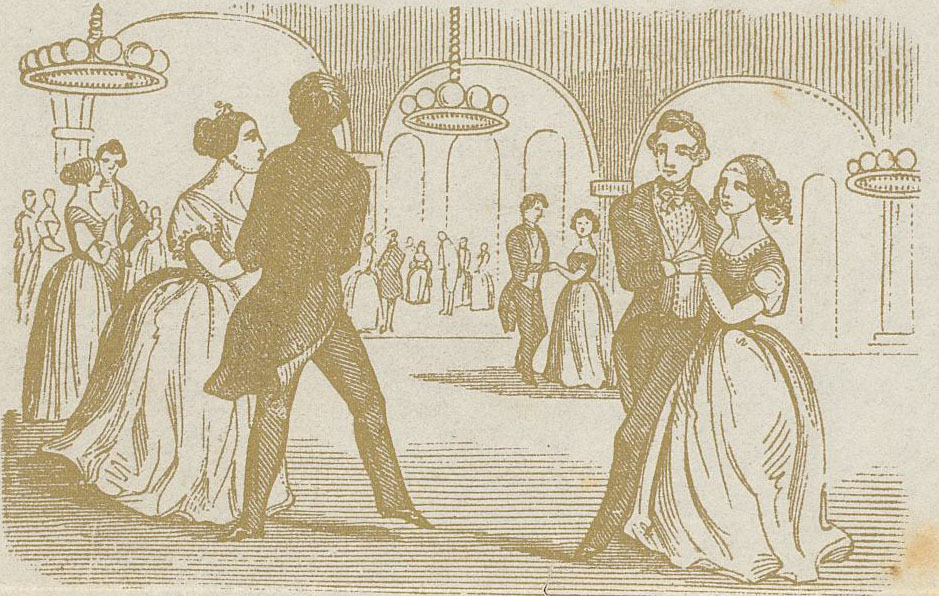
Once upon a time, even here in little ol’ rural Vermont, in the 19th century, any time seemed a good time for a ball. However, the holidays – from Thanksgiving through New Year – were a particularly popular time. And in a time of rapid industrial growth, the expanding middle-class was eager to enjoy the kind of fun previously afforded only to the Old Rich.
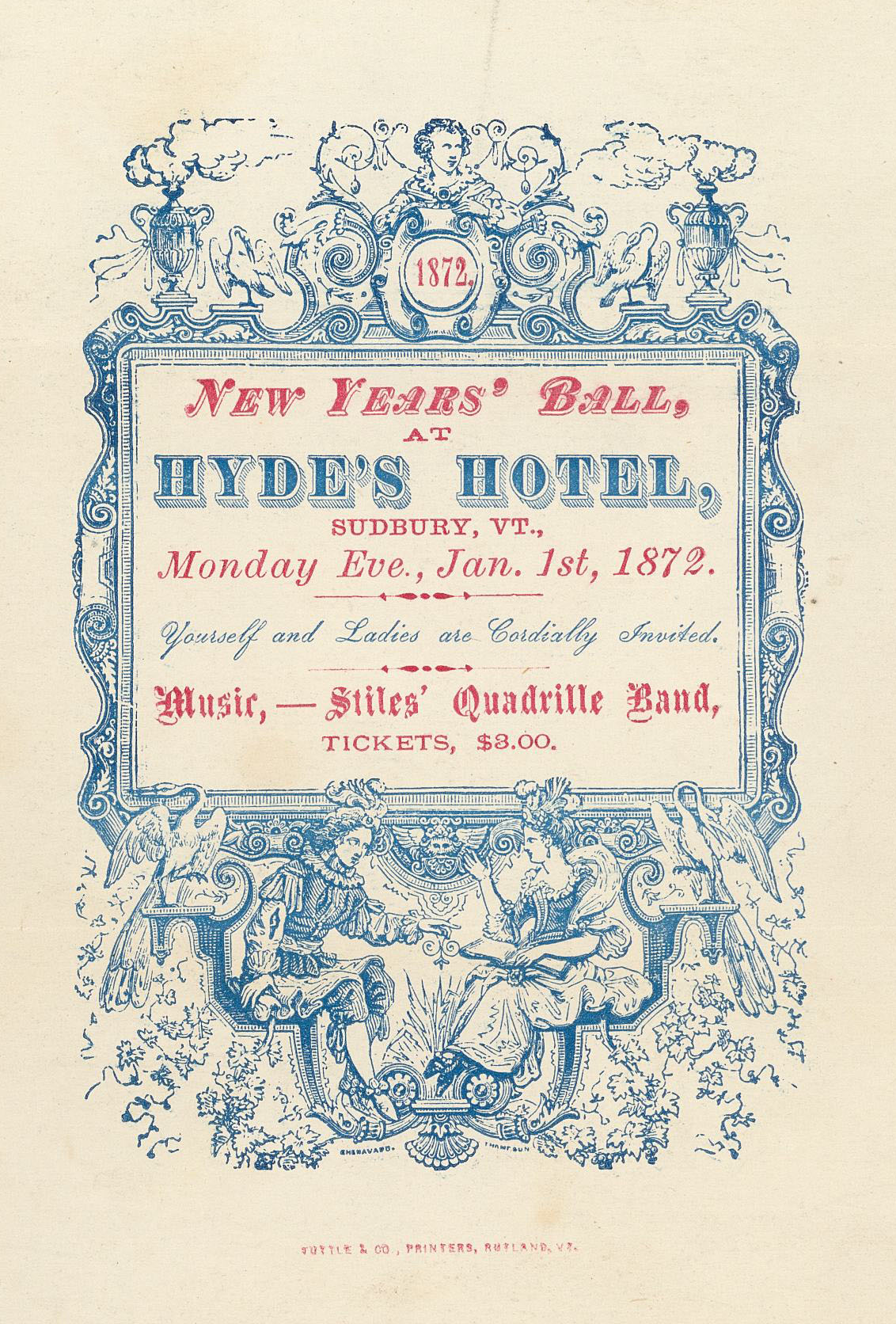
While private by-invitation-only balls and parties had been held earlier in the century – such as the ball held on Christmas Day, 1806 at Hyde’s Hall in Castleton – ticketed events open to the public weren’t generally known until mid-century. In fact, the first (known) advertised Christmas ball was in 1858. It was one of five “Anniversary Balls” listed in the Middle Register on December 15th, 1858 to be held at Hyde’s Hotel in Sudbury. (Some may recall the huge tumbling-down mansion on Route 30 just north of Hubbardton. This was the once-grand Hyde’s Hotel, or as it was renamed in the late 19th century, Hyde Manor.)
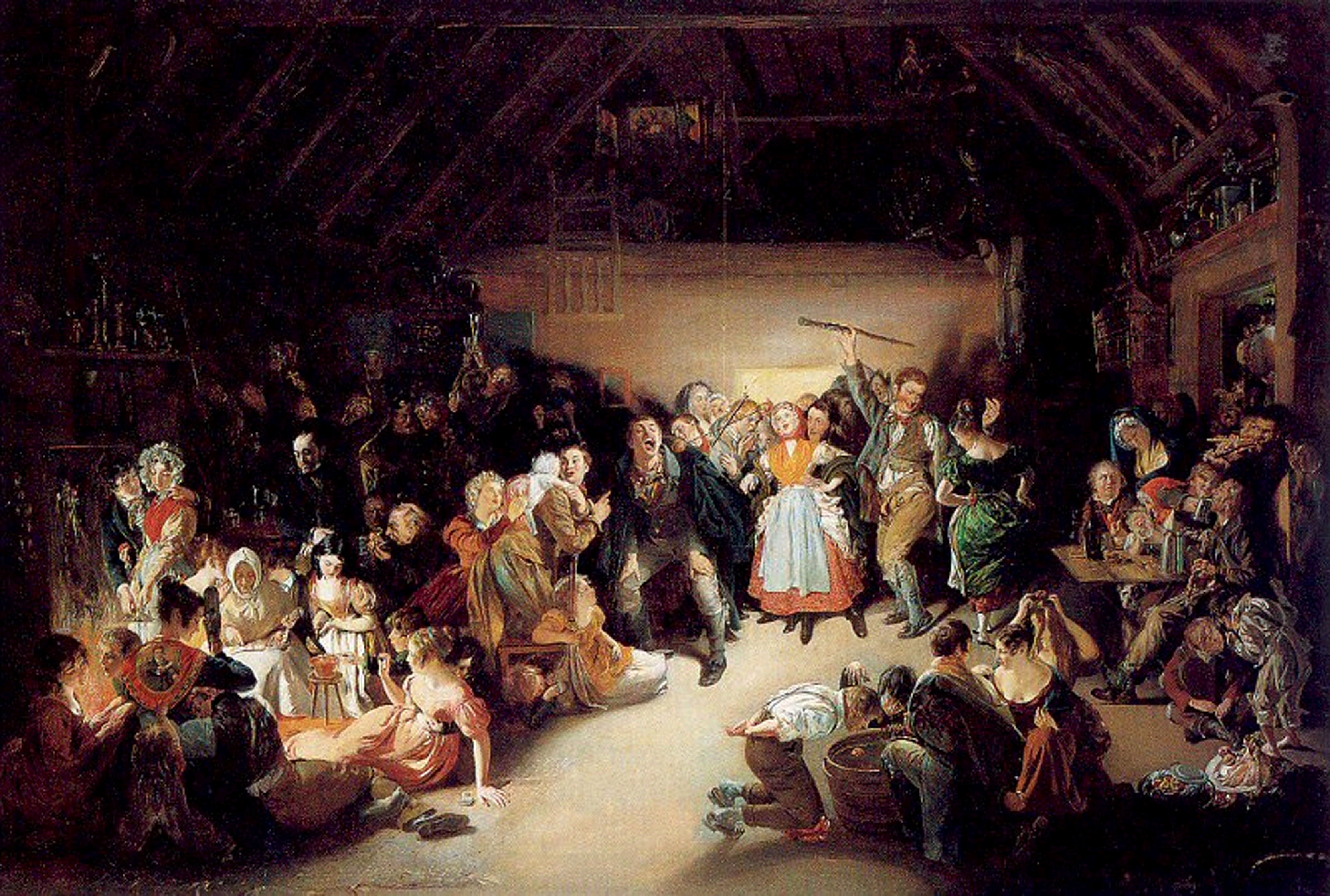
Snap-Apple Night by Daniel Maclise, 1833 (Wikicommons)
Originally published in the Times Argus/Rutland Herald Weekend Magazine, October 28, 2023 for the “Remember When” column with the title,Hallowed Apples
Today, apples aren’t generally associated with Halloween; fall, yes (it’s almost as if we are contractually obligated to go apple-picking this time of year), but apples are all together too un-scary for modern Halloween tastes. (Irony dictates that we must recall the scare of the 1960s and 1970s that first removed apples and other non-commercially-packaged goodies from trick-or-treat pails.)
However, apples and Halloween go way back. October 31 is the eve of Samhain, the Celtic New Year, a time of year when the veil between the worlds of the living and dead lifted. It has been also suggested by some historians (but not proven) that over the course of Rome’s occupation of Britain, two Roman celebrations — one, Day of the Dead, and the other in honor of the goddess of fruit, Pomona — commingled with the festivities of Samhain.
Burning bonfires and tying apples to evergreen branches to encourage the sun god to return, the ancients would also put food outside their doors to ease restless spirits. To avoid the spirits from recognizing them during the day, people wore masks, or in other cases, dressed up as them to collect food on their behalf. By the 16th century, especially in Scotland and Ireland, this ritual had evolved into children going “guising,” that is, dressing up in costumes and going door to door asking for food. Even into the 1960s, Irish children were asking their neighbors, “Any nuts or apples?” In some parts of Canada children used to say, “Halloween Apples” instead of “trick-or-treat.”
(Author’s aside: I had never trick-or-treated until I moved to the US in 1985. In the UK, November 5th — Bonfire Night or Guy Fawkes Day — was the time for bonfires and apple-bobbing. Ironically, dressing up or trick-or-treating on Halloween didn’t become A Thing until after the movie E.T. introduced Brits to the idea in the 1980s.)
It’s no great mystery why apples might be associated with this time of year: fall is when the apples are ripe. Apples are not only the last crop to be harvested but also the most versatile, and for our ancestors, especially here in the cold North, they were a life-source. Eaten straight off the tree, cooked into baked goods, dried for later use, preserved as apple butter, fermented into cider, or fed to the pigs, from fresh to rotting, apples were (are) the fruit that keeps on giving.
For this reason, an affinity with apples also made sense mystically to the ancients. As the last food-source available before the land became barren once again yet “living” through the winter in its various iterations, apples have always been associated with immortality. And as their spring blossoms herald renewed life, their womb-like nature — round with seeds at the center — also symbolized fertility and love. As Samhain was a time when our ancestors looked to the future, apples also became central to fortune-telling rituals and games for thousands of years. Here are a few favorites from the 18th century:
Snap Apple: Two sharpened sticks, tied into a cross-shape and with an apple and a burning candle stuck on opposite points, were hung from the ceiling. When the contraption was set in motion, unmarried men and women, hands behind their backs, took turns trying to catch an apple in their mouth. Winning determined who was to marry first.
Apple-bobbing (or donking): Young women would secretly mark their name on an apple which was then set afloat in a tub of water. Bachelors would then try to retrieve an apple with their mouth. The name on the procured apple predicted which of the girls he would marry.
Apple-peel throwing: While preparing apples for their various uses, girls would try to peel the skin in one continuous ribbon. The peeling was then thrown over the shoulder and the shape in which it landed supposedly formed the initial of her future husband.
While the Puritans didn’t bring such “heathen” ideas to America, Celtic/British traditions eventually made their way to New England with the Irish in the mid-19th century. Snap Apple doesn’t seem to have spread outside Vermont’s immigrant communities since there is no mention in the newspaper archives of the game outside of stories about the “Old World.” However, a safer version, where party-goers try to bite into a donut hanging from a string, did survive even into this century.
Fortune-telling was still part of Halloween party fun in the early 20th century, but, as the Bennington Banner proclaimed, “the revelers of 1912 scorn the old tricks carried out with apples, nuts, and the like and have invented new fun this year.” Instead, young ladies would peer through holes cut in a sheet to guess the male peeking through from the other side, or, as a 1927 article from Groton describes, gathered in a dark room, girls picked their “future husband, or second, as the case should be,” by correctly identifying that man’s silhouette on the other side of a sheet.
Apple-bobbing is the only age-old game that has remained in the modern consciousness. While maybe not a common element of Halloween parties today, it still shows up as a form of entertainment at some fall festivals. Thankfully, marriages are no longer dependent on the results.
These celebrations may be a world apart from the aesthetics and antics of a modern Halloween — a sight no ancient fortune-seeker could have ever predicted — but at our many annual apple and cider festivals, Vermonters still honor the ever-amazing apple that helped get generations of our ancestors through the winter.
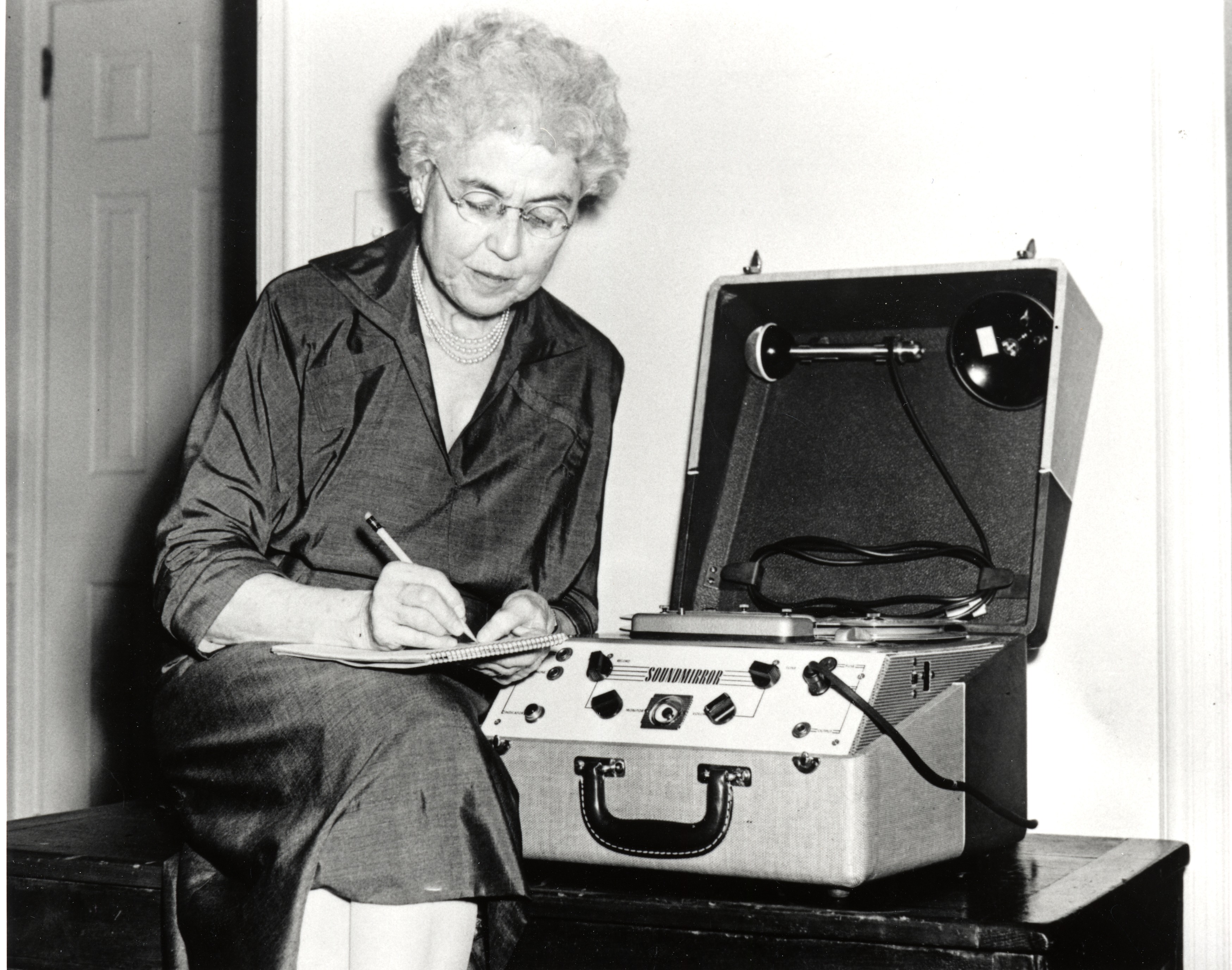
Helen Hartness Flanders with dictaphone (prob 1950s), Middlebury College Special Collections, Middlebury, Vermont
Originally published in the Times Argus/Rutland Herald Weekend Magazine, March 25, 2023 for the “Remember When” column with the title,Capturing literary history
One day in the early 1930s, up the mountain road in Shrewsbury chugged an open-top car. Coming to a stop at Pierce’s Store, a middle-aged woman stepped out and warmly greeted Mrs. Pierce, the store’s proprietor. The visitor was Helen Hartness Flanders and she was in Shrewsbury to capture a sound of the past.
Fifty years later, at age eighty-three, Marjorie Pierce remembered this day with a smile, the day Mrs. Flanders hauled a bulky dictaphone out of her car and asked her mother to sing into it.
Helen Hartness was born in 1890 in Springfield, Vermont to Lena Pond and James Hartness, inventor and head of Jones & Lamson Machine Co. and governor of Vermont from 1921 to 1923. After graduating from Dana Hall in Wellesley, MA in 1909, Helen often traveled from Vermont to Boston to study music under the pianist and composer, Heinrich Gebhardt. When she was twenty-one, Helen married a business acquaintance of her father, Ralph Flanders, a mechanical engineer, and eventual US Senator.
Helen Hartness Flanders in 1920s (Midd. College Special Collections)
Helen was not just a gifted musician but also a poet. Mingling with Springfield’s literary elite at her family’s home, Smiley Manse, where Robert Frost and Dorothy Canfield Fisher were among her guests, she soon caught the attention of Vermont’s higher ups.
In early 1930, Gov. George Weeks asked Helen to join the committee on Vermont Traditions and Ideals, a branch of the Vermont Commission on Country Life (a program which grew out of Prof. Henry Perkin’s Eugenics Survey). Made Chairman of the Vermont Songs Survey, she became part of a team tasked with creating a four-volume collection of Vermont prose, poetry, biography, and folklore.
With the rise of radio, interest in traditional music had waned throughout the previous decade. As the last generation of ballad singers began to die out, there was concern that this aspect of Vermont’s history—what Helen called “hand-me-down singing”—would soon be lost.
Helen spent most of the first summer researching and writing letters and articles to newspapers around the state asking for the public’s assistance in her important mission. “What I have come upon in our State shows me that Vermont, which we all know has a way all of her own in growing scenery and men, has an equally distinguished way of growing her music,” she wrote to the Burlington Free Press. “Please search your memories and write to me.”
With letters with the names of those who still sang the old music starting to arrive in Helen’s mailbox, she and her partner, George Brown, a cellist and conductor of the Springfield summer orchestra could begin song collecting in earnest. Traveling with a thirty-pound wax cylinder dictaphone that ran off huge batteries carried in the back of the car, by October 1930, they had collected seventy-five songs just in southern Vermont.
Helen had a particular knack of coaxing songs out of people, writes Deborah Clifford, author of Remarkable Vermont Women, most of whom were over sixty-years-old, and often reticent to sing for a stranger. But, as Helen wrote in the introduction to her 1931 book, Vermont Songs and Ballads, by agreeing to do so, they “contribut[ed] to the literary history of our state.”
Searching at first specifically for “Child Ballads”—considered the oldest narrative songs originating in England—they ultimately collected many songs that were “very human stories that were made into song too far back in the generations to have any known origin.”
However, as Helen told attendees of the 1930 annual PTA meeting in Brattleboro where she shared some of her finds, there was “a flavor as particular to Vermont as any Kentucky mountain song had to that state.” Often these were “written to commemorate calamities or deeds of heroism,” the Springfield Reporter explained. One such song, sung for the PTA members by Josiah Kennison of Townshend, was “The Snow Storm,” a ballad about what came to be known as the Stratton Mountain Tragedy.
By the time the Commission’s funding ran out, Helen was fully hooked on song collecting, and partnering with Harvard musicologist, Phillips Barry, used her own money to continue the work she had fallen in love with. “The intangible, indescribable delights which went with the collecting of each song are not filed with them. These cannot exist in words,” she wrote in 1939. “Even that moment before driving out of the yard, with the dictaphone, address books, looseleaf notebooks, etc., on the seat of the car, cannot be distilled into the written word. Just beyond the windshield is the day-which one regards as untouched and undoubtedly undeserved (in the flurry of what is to be neglected at home)-so different each time, but always so electric with the unknown.”
Vermont didn’t make her job easy, however. Due to deplorable conditions of the back roads, collecting had to be suspended during winter months. Some of the old “songsters” on her list died before she could get to them. Each year she waited impatiently for the end of mud season. “To the folksong collector… spring is far more than joy in full-running streams and bird-songs,” she once said.
In 1941, when the slew of recordings and papers began overwhelming her home, Helen donated the collection to Middlebury College. (A year later, Middlebury awarded her an honorary MA degree.) Marguerite Olney, a graduate of Eastman School of Music with whom Helen had recently begun collaborating, curated the collection and took over the majority of fieldwork throughout the 1940s and 1950s. The two books the women ultimately co-authored brought Helen’s stack of published works on folk music to eight (in addition to her poetry volumes, a children’s play, and bylines in newspapers throughout New England).
Despite living in Washington DC for stretches of time over the twelve years her husband held office, Helen continued to work on the collection. In fact, with Marguerite’s help, the mission expanded beyond Vermont’s borders. Gathering religious, children’s, and popular songs, dance tunes and folktales from all around New England and New York, by 1958, the collection had grown to almost 5,000 recordings—including some performed by ethnomusicologist Alan Lomax—broadsides, hymnals, manuscripts, and transcriptions, plus several thousand books on American folksong, folklore, and balladry.
As Helen entered her twilight years, she spent most of her time home at Smiley Manse cataloging the collection. In 1967, her name was the first to be inscribed on Vermont’s Roll of Distinction in the Arts.
Just days after turning eighty-two, Helen—nicknamed the “First Lady of Springfield”—died. The poetess and balladeer, as her obituary called her, was remembered as kindly, modest, humorous, and hard-working, and was lauded as a woman with “tact, good sense and ability.” Her “most extensive knowledge of Vermont lore [was] perhaps more than anyone else in the state.”
Today, folklorists and musicians from around the world continue to consult the Helen Hartness Flanders Ballad Collection. The voices of yesterday can still be heard, the stories a reminder of Vermont’s past, captured in song.
The Snow Storm
The cold winds swept the mountain’s height, And pathless was the dreary wild, And mid the cheerless hours of night A mother wandered with her child: As through the drifting snow she pressed, The babe was sleeping on her breast. And colder still the winds did blow, And darker hours of night came on, And deeper grew the drifting snow: Her limbs were chilled, her strength was gone: “Oh, God!” she cried, in accents wild, “If I must perish, save my child!” She stripped her mantle from her breast, And bared her bosom to the storm, And round the child she wrapped the vest, And smiled to think her babe was warm. With one cold kiss one tear she shed, And sunk upon her snowy bed. At dawn a traveler passed by, And saw her ‘neath a snowy veil; The frost of death was in her eye, Her cheek was cold, and hard, and pale; He moved the robe from off the child, The babe looked up and sweetly smiled!
Originally published in the Times Argus/Rutland Herald Weekend Magazine, February 25, 2023 for the “Remember When” column with the title,The Right to Read and Savor.
This article was written in response to a planto remove the majority of books from Vermont State College’s libraries. This terrible idea was — thankfully — eventually abandoned.
“A library is the nucleus of an educational facility… a college can only be as good as its library.” — Castleton State College Long Range Objectives Report, 1976
Students studying at Castleton State College’s Calvin Coolidge library in 1958
Last week I drove over to Castleton to my alma mater. I walked through campus, stepping over the plaques embedded in the path, each engraved with a name of the school, from Rutland County Grammar School in 1787 to today’s Castleton University. Even thirty years after I graduated, this still feels like home. Pushing open the door into the Calvin Coolidge library, I was filled with the same mixed sense of calm, comfort, and excitement as I had as a student. Surrounded by the intangible presence of knowledge, I spent many hours here studying, researching, browsing—learning who I was and wanted to be.
Michele, one of the incredibly helpful and knowledgeable Castleton librarians, showed me into the Vermont Room where the information I needed for this column is stored in file boxes, on shelves, and safely behind glass (including a green bound copy of my own History Honors thesis). There I sat for a few hours—and wanted to stay for many more—carefully leafing through the ephemera, much of which is priceless (and un-digitizable) pieces of Castleton’s—and Vermont’s—history: two hundred-year-old log books, one hundred-year-old course catalogs, faded photographs of Mercel-permed students, and mimeographed letters from the 1960s.
Originally published in the Times Argus/Rutland Herald Weekend Magazine, February 4, 2023 for the “Remember When” column with the title,Lucy Terry Prince
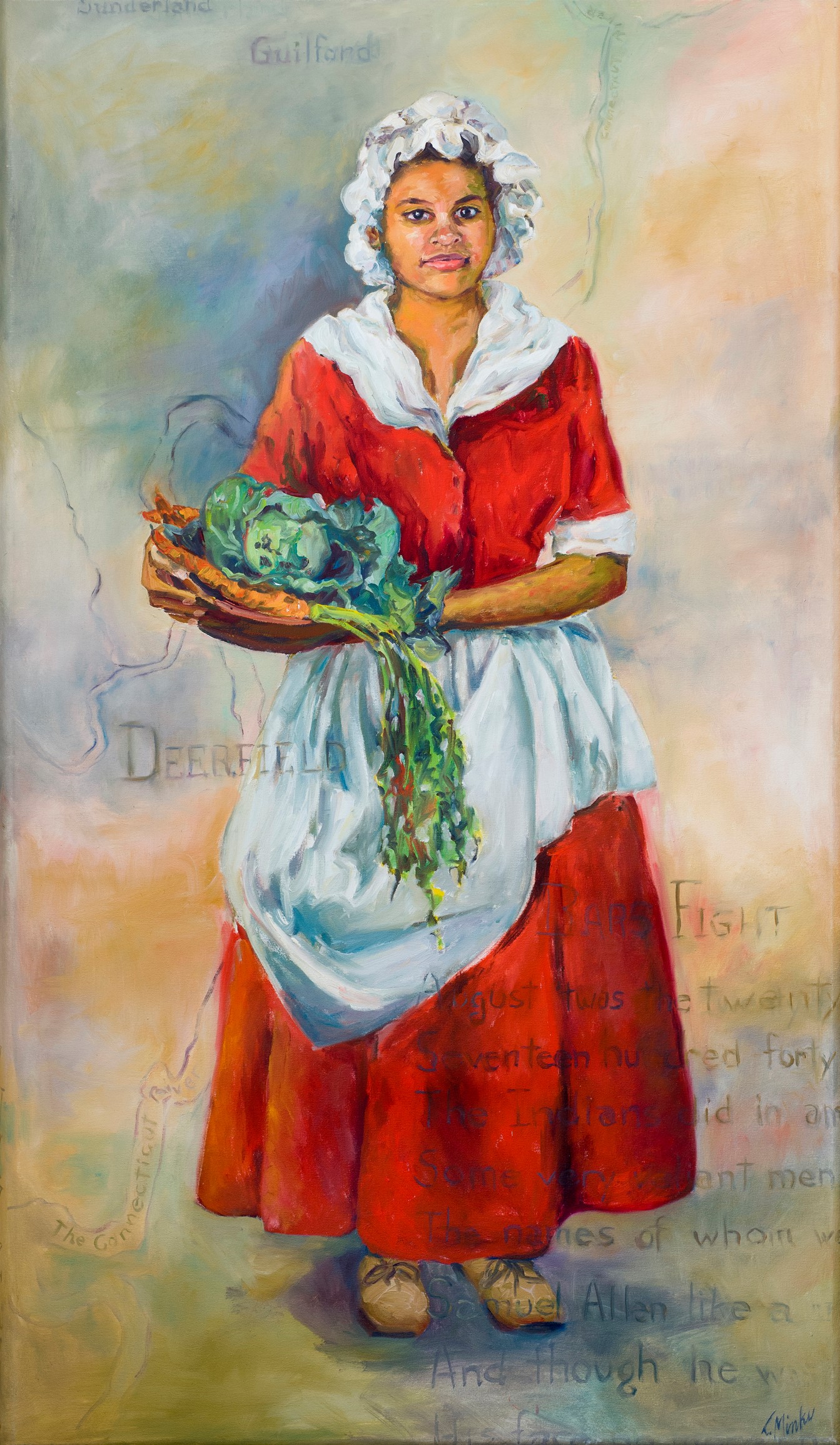
Lucy Terry Prince by artist Louise Minks
On August 14th, 1821, an unusual obituary ran in the Bennington’s Vermont Gazette. It was particularly detailed and for a woman, a black woman. Furthermore, this “remarkable” and “much respected woman” in whom “there was an assemblage of qualities rarely to be found among her sex,” was one of the first settlers in what would become the state of Vermont.
If that’s not enough, she is considered this country’s first known African American poet.
The story of Lucy Terry Prince is as fascinating as it is complex. The many twists and turns of her 90-plus years cannot possibly be captured here – what follows is the barest outline of a life that bore witness to the very beginnings of what would become the United States. (For a meticulously researched, in-depth study of her and her family, see Gretchen Holbrook Gerzina’s Pulitzer Prize nominated Mr. and Mrs. Prince: How an Extraordinary Eighteenth-Century Family Moved Out of Slavery and Into Legend.)
In approximately 1730, a little girl was born in Africa, who, when barely out of toddlerhood, was kidnapped and shipped off to the American colonies. Most likely landing in Boston, she was sold to Samuel Terry and given the name Lucy. From there she was sold to Ebenezer and Abigail Wells of Deerfield, MA, becoming an integral – but far from equal – member of the family.

 Vermont When...