For sale to the highest bidder: When Vermont church pews were considered personal real estate

Originally published in the Times Argus/Rutland Herald Weekend Magazine on 2.19.22 in the Remember When column with the title “Church Pews for Sale or Rent”
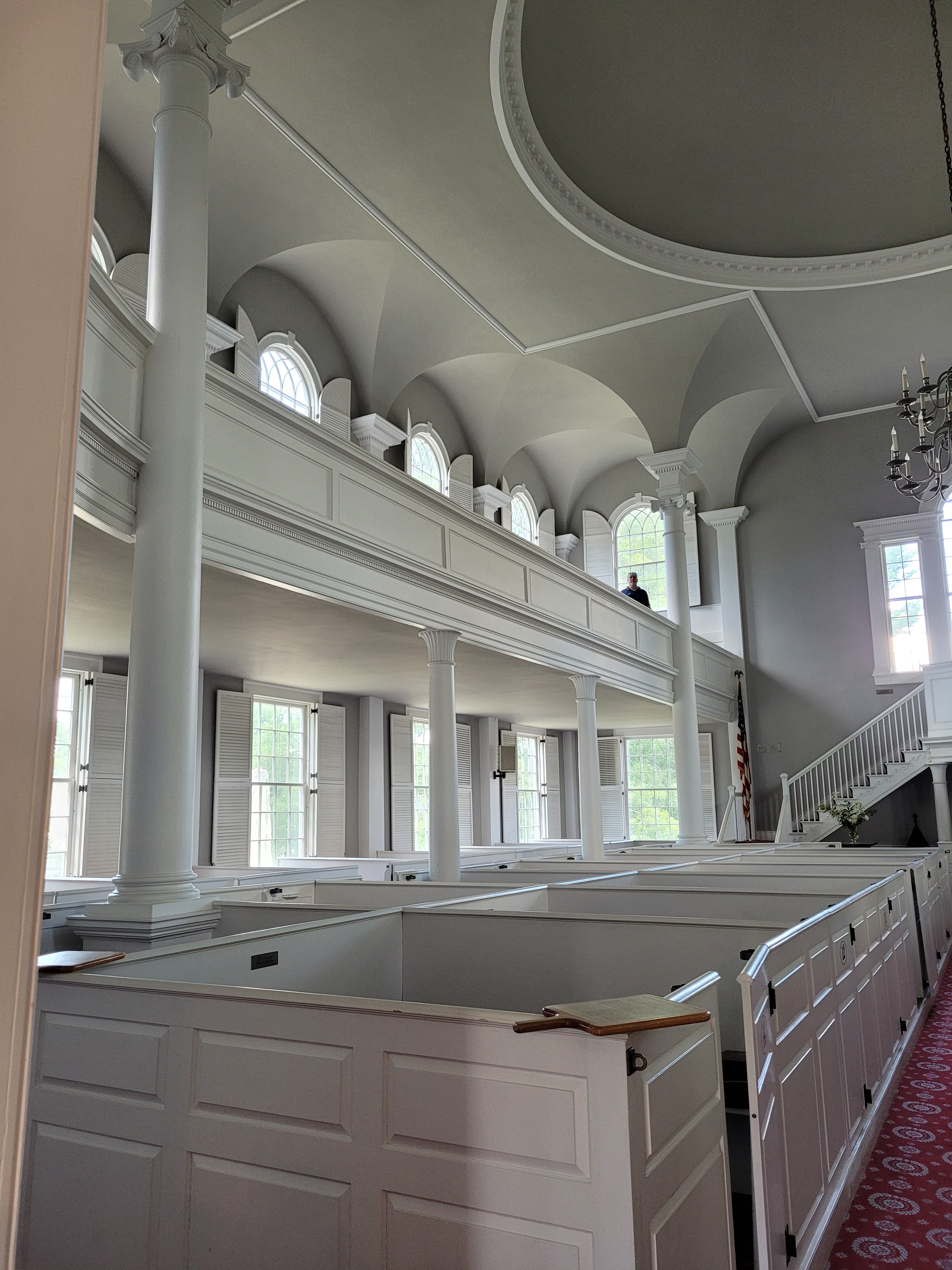
Old First Church, Bennington, Vermont. Photo credit: Joanna Tebbs Young

On Nov. 25, 1835, Mr. Seth Shaler Arnold wrote in his diary: “Attended the sale of the pews in new Meeting house Westminster. Bid off one for Esther — two for father and one for myself and Mr. Ruggles.”

Two years later in June, he wrote: “Settled with Mr. Ruggles. Bought his share of ⅓ of pew No. 8.” And by August, Mr. Arnold was musing on the fact that “Mrs. Cobb commenced sitting in my father’s pew and then changed to mine — Mrs. Nutting has sit (sic) there more than a year. And Mr. Hollis Wright’s family have just commenced sitting there. The two former at 75 ct. each and the latter at about 2 dollars.”

Buying church pews? Renting them out? What was going on here? What might appear socially discriminatory (or morally questionable) to the modern eye, was an economic necessity at a time when communities were establishing themselves in a young New England.

Continue reading
Happy 100th to Windsor, Vermont’s Namco Block Apartments

Originally published in the Times Argus/Rutland Herald Weekend Magazine in December 2021 in the “Remember When” column with the title “One Hundred Thanksgivings.”

In November 1921, the Johnson family, formerly of Springfield, Vermont, enjoyed  Thanksgiving in their new, cozy, light-filled rooms overlooking Mill Brook in Windsor. They had moved to the not-quite-finished Namco apartments earlier that year of 1921, and in doing so marked their name down in history — or at least in the April 29th edition of the Vermont Journal — as the very first tenants of the then largest residential building in New England. 

The Namco block (now Union Square), the majestic red-brick apartment building at the corner of Windsor’s Union and Main Streets, was built in 1920 by the L.A. LaFrance Company of Holyoke, Massachusetts. Originally designed as family housing for the employees of the National Acme Company (Namco), it is an architectural surprise, seemingly out-of-place in a small Vermont village. With its rows of bow windows “undulating… along… [its] extremely long facade,” as a National Register of Historic Places report describes it, is as much an impressive sight now as it surely was a century ago. 

Continue reading

Seasoning Vermont: When Fall Became a Product

Originally published in the Times Argus/Rutland Herald Weekend Magazine on 10.16.21 in the “Remember When” column with the title “Falling for Vermont

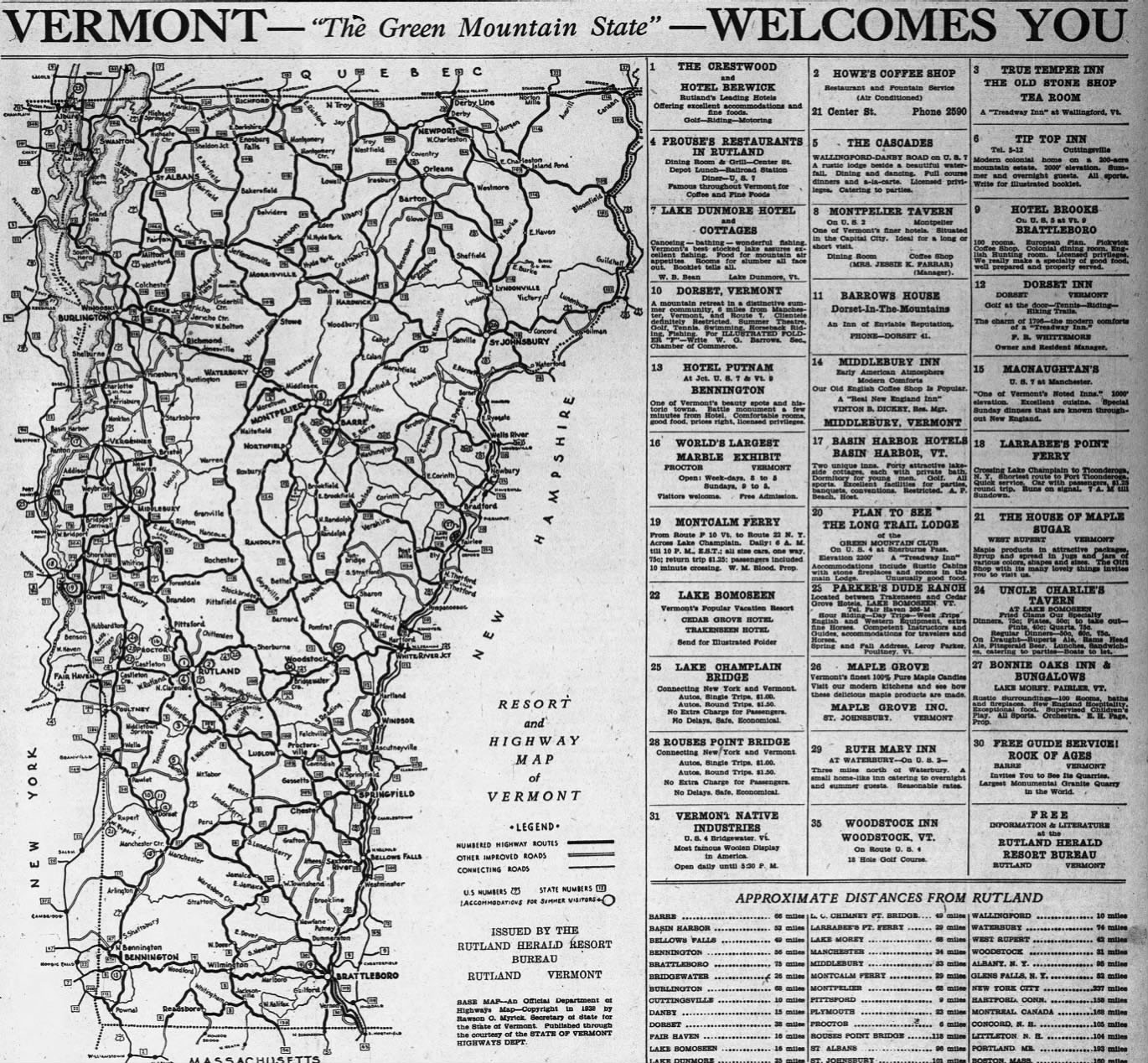
Frank O. Duffy, a postal worker from Mattapan, Massachusetts, had been visiting Wallingford for more than 40 years. His friend, Patrick J. Muiry, of Boston, had “discovered” the town back in 1895. And now, the retired Mr. Duffy was staying at Maple Grove Farm for his annual October vacation. The foliage was, he told the Rutland Daily Herald, “as gorgeous as ever this year,” especially along the “back roads where October’s colors are gayest.”

It was 1937, and Vermont hadn’t long been a fall vacation destination. That is, until marketers decided it should be.

Continue reading

Gone to the Dog… River Valley Fair, Northfield, Vermont

Originally published in the Times Argus/Rutland Herald Weekend Magazine on 9.18.21 in the “Remember When” column with the title “Northfield’s Dog River Valley Fair

It was the third week of September 1928 when Northfield’s oldest resident, Joseph C. Rice, was honored as a special guest at Northfield’s Dog River Valley Fair. Mr. Rice, who at age 97, according to the Rutland Daily Herald, still enjoyed excellent health and was “about the village streets everyday,” was recognized by the fair directors for his impressive attendance record: 57 consecutive years, the same number of years the fair itself had been in existence.

Continue reading