Lucy Terry Prince: Early Vermonter and First African-American Poet 

Originally published in the Times Argus/Rutland Herald Weekend Magazine, February 4, 2023 for the “Remember When” column with the title, Lucy Terry Prince
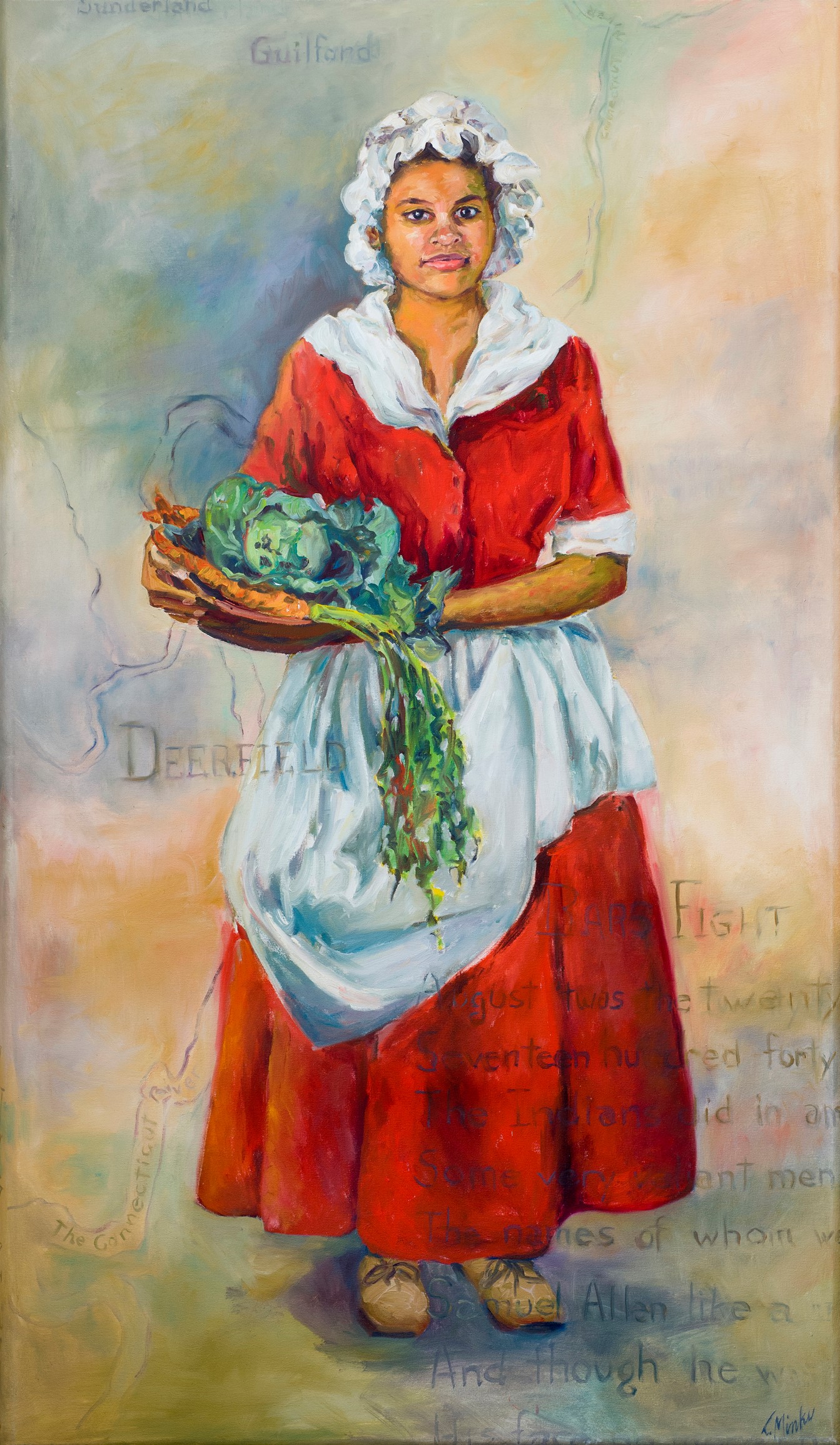
Lucy Terry Prince by artist Louise Minks

On August 14th, 1821, an unusual obituary ran in the Bennington’s Vermont Gazette. It was particularly detailed and for a woman, a black woman. Furthermore, this “remarkable” and “much respected woman” in whom “there was an assemblage of qualities rarely to be found among her sex,” was one of the first settlers in what would become the state of Vermont. 

If that’s not enough, she is considered this country’s first known African American poet. 

The story of Lucy Terry Prince is as fascinating as it is complex. The many twists and turns of her 90-plus years cannot possibly be captured here – what follows is the barest outline of a life that bore witness to the very beginnings of what would become the United States. (For a meticulously researched, in-depth study of her and her family, see Gretchen Holbrook Gerzina’s Pulitzer Prize nominated Mr. and Mrs. Prince: How an Extraordinary Eighteenth-Century Family Moved Out of Slavery and Into Legend.)

In approximately 1730, a little girl was born in Africa, who, when barely out of toddlerhood, was kidnapped and shipped off to the American colonies. Most likely landing in Boston, she was sold to Samuel Terry and given the name Lucy. From there she was sold to Ebenezer and Abigail Wells of Deerfield, MA, becoming an integral – but far from equal – member of the family.

Continue reading
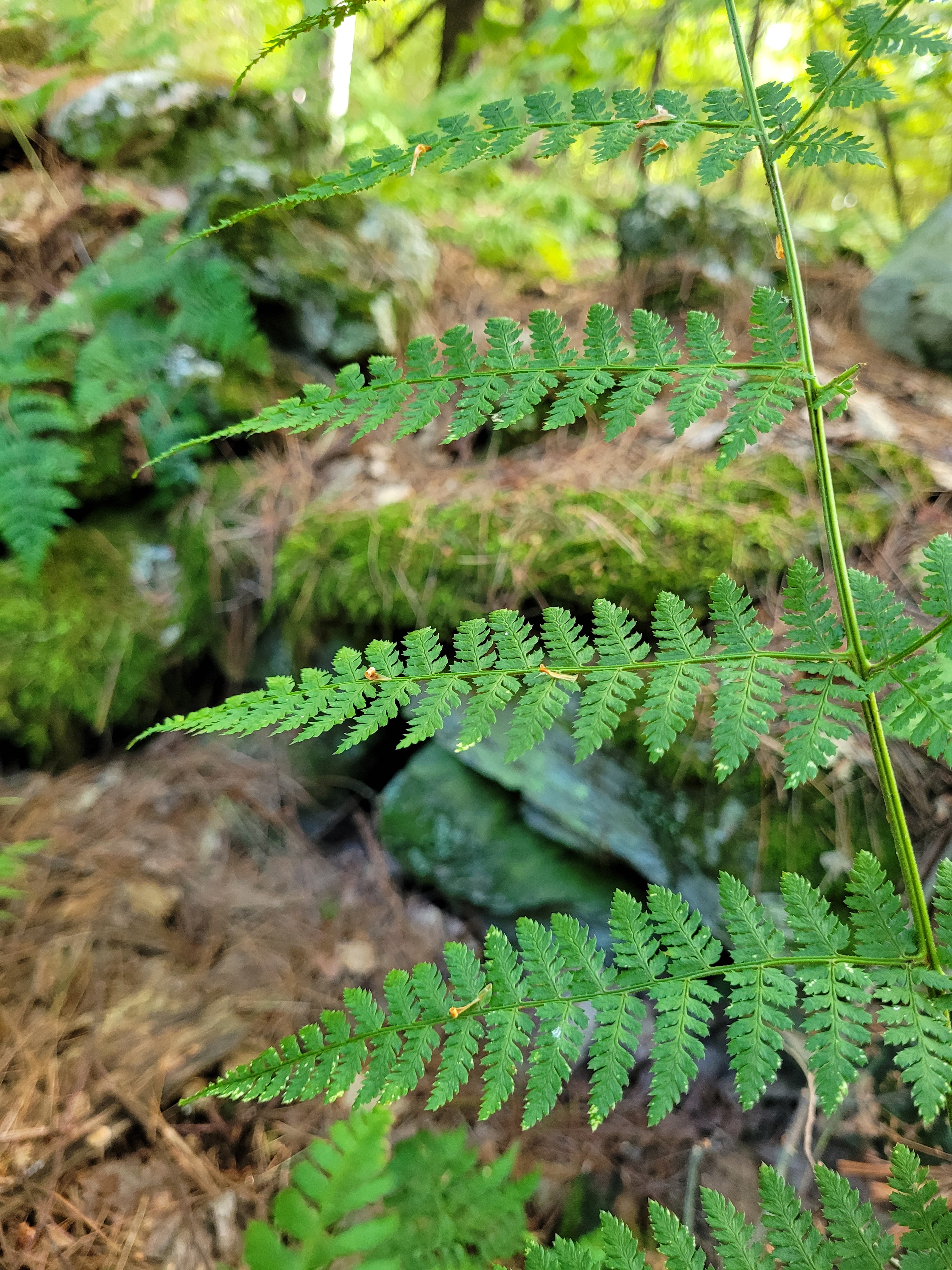
Stone Storytellers: The Stonewalls of Vermont

Originally published in the Winter 2022 Rutland Magazine with the title, “Tumbling through Time.” (All photos taken by Joanna Tebbs Young)

When I was teenager, my father was obsessed with old stone walls. Old Vermont stone walls, to be precise. 

There’s an old stone wall,” he’d say as he attempted to steer our 1979 maroon Pontiac ship-of-a-station wagon around the dried mud waves of some back road. We hadn’t long moved from England and many a weekend was spent exploring our new home state, which for my father meant turning down every dirt road we happened upon. 

“Look at that old stone wall,” he’d say to no one in particular as my sister and I bumped and swayed on the beige spider-veined vinyl of the back seat. 

“Oh, that’s a really old one.” 

To humor him, I sometimes generously offered a “oh, yeeeaaah.” But seriously? A stone wall? Whoop-de-do.

~~

Thirty years later, my teenage son slouches in the back seat, straining against the tight seat belt as he tries to conform his length to our compact car. He is all hoodie, earbud cords, and legs. He begrudgingly joined this road trip only when bribed with promises of McDonald’s iced coffee. 

We’re driving on a not-quite-dirt road near Shrewsbury, near Windsor, Springfield, Reading, hillside properties either side. The leaves are gone, the views are spectacular. Even in the brown-gray of November, Vermont awes. There are fields and there are woods, there are lawns and there are barns. 

And there are old stone walls. 

“There’s one!” I say. “Wow, that one really survived well!”

“And another one! 

My husband obligingly acknowledges the tumble of rocks just visible in the tangled undergrowth. Silence from the back seat. Except for the rattle of ice cubes and scree-scree of a straw in a plastic cup. 

“So, I know you don’t really care,” I say, glancing back at my son, “but I’m going to tell you about these walls anyway. We are surrounded by history and knowing it is important.” 

 “Aaaand, you never know…” I smile with mother-is-all-knowing-ness. “Maybe one day you’ll tell your kids about them.”

He peeks out from under his hoodie. “Yeeeaaah.”

~~

Vermont’s stone walls tell a tale of time. Not merely evidence of the immigrant and native-born farmers who settled here in the late eighteenth and early nineteenth centuries, these walls summon a far older story. The stones puzzle-pieced into these walls tell of a land that wasn’t always green, rounded, and rivered. Smoothed into craggy slabs and spheres over eons, these rocks are a reminder that long, long ago this land was created as retreating glaciers grazed granite mountains along their way. These stones, and the silt beneath them, are the literal bedrock of Vermont’s history and of the people who have chosen to call it home. 

Continue reading