Dancing the winter blues away: Kitchen Junkets

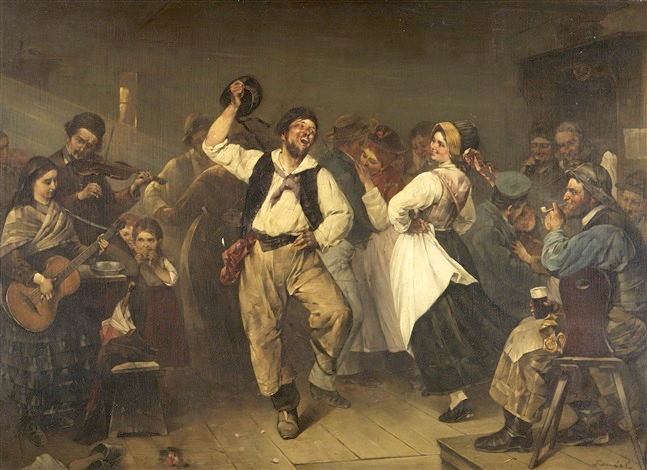
Max_Rentel_-_Fischertanz_1880_Wikimedia

This is a repost of an article originally published in the Rutland Herald/Times ArgusWeekend Magazine on January 20, 2024.

For our ancestors, winter in rural Vermont was long and arduous. The short days were crammed full with laborious farm and house chores while the dark nights were long and filled with… not much. Maybe dreams of warmer days? And when the snow was too deep for even ox-pulled snow rollers to clear a path, it was not unheard of for some families to be housebound for days at a time.

But Vermonters — many of whom were not long descended from the dance and music-loving English, Scottish, and Irish, or were newly settled French-Canadians — knew how to brighten the dark nights: With music. And more specifically, with a “kitchen junket” or “tunk.”

Continue reading on Substack: joannawriteshistory (no subscription required)
Having a Ball at Holiday Time

(all images courtesy Vermont Historical Society)

Originally published in the Times Argus/Rutland Herald Weekend Magazine, December 24, 2022 for the “Remember When” column with the title, When Holidays Were a Ball

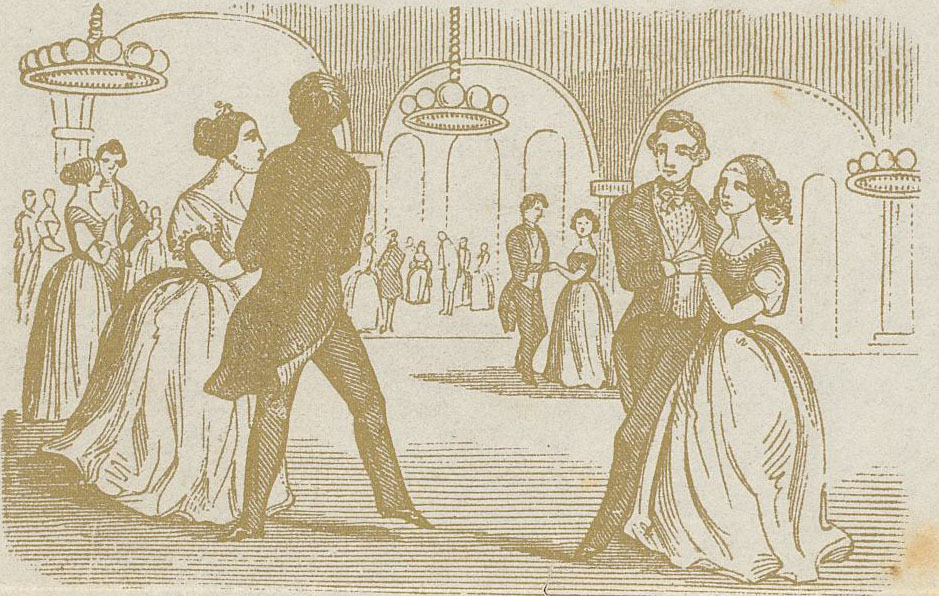
Once upon a time, even here in little ol’ rural Vermont, in the 19th century, any time seemed a good time for a ball. However, the holidays – from Thanksgiving through New Year – were a particularly popular time. And in a time of rapid industrial growth, the expanding middle-class was eager to enjoy the kind of fun previously afforded only to the Old Rich. 

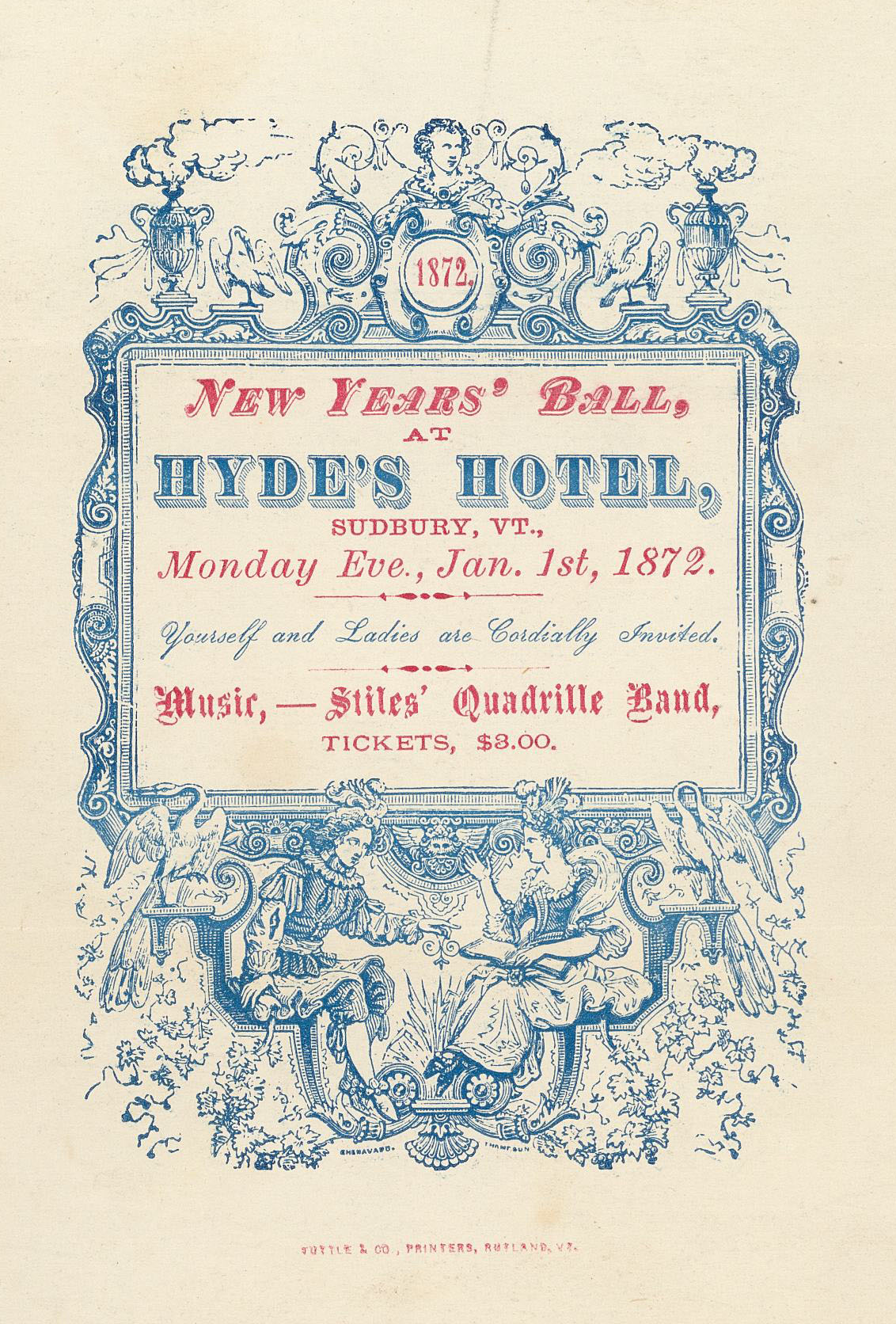
While private by-invitation-only balls and parties had been held earlier in the century – such as the ball held on Christmas Day, 1806 at Hyde’s Hall in Castleton – ticketed events open to the public weren’t generally known until mid-century. In fact, the first (known) advertised Christmas ball was in 1858. It was one of five “Anniversary Balls” listed in the Middle Register on December 15th, 1858 to be held at Hyde’s Hotel in Sudbury. (Some may recall the huge tumbling-down mansion on Route 30 just north of Hubbardton. This was the once-grand Hyde’s Hotel, or as it was renamed in the late 19th century, Hyde Manor.) 

Continue reading