Apples, apples everywhere: When homegrown became Vermont’s business

Originally published in the Times Argus/Rutland Herald Weekend Magazine, October 1, 2021 for the “Remember When” column with the title, Apple of Vermont’s Eye
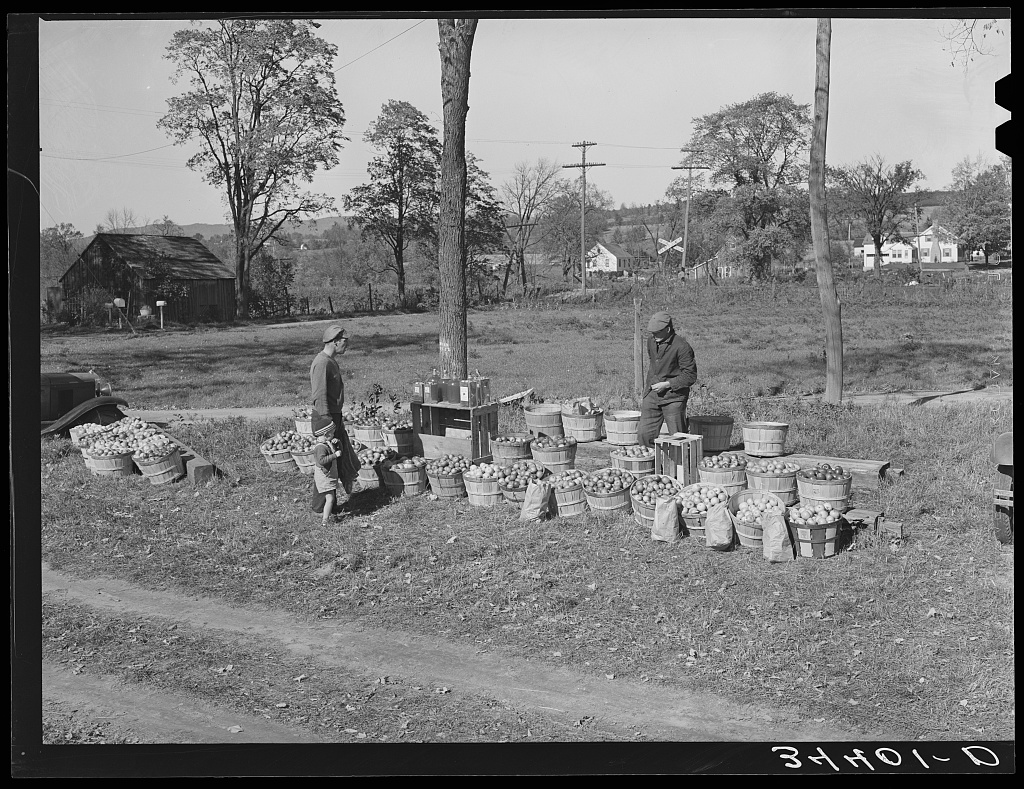
This roadside fruit stand was pictured near Bennington in 1939 (Library of Congress)

In September 1922, Bess M. Rowe penned an article for The Farmer’s Wife after she visited the Dimock Orchard Farm in East Corinth. In “Bringing Back the Old Trees,” Miss Rowe wrote of the charming conversations she had with the self-named “farmerettes” who, since taking charge while “the men” were away at war, continued to be instrumental to the farm’s successful operation. After Mr. and Mrs. Julian Dimock — a magazine writer and former professor, respectively, and farming novices both — moved to Vermont and started the farm 10 years earlier, they were proving themselves adept orchardists.

Their success could be put down to natural talent or, as Miss Rowe noted, their receptiveness to “modern ideas and methods,” and having “nothing to unlearn.” But the couple’s move into apple-growing also came at an opportune time in Vermont’s fledgling apple industry.

Continue reading
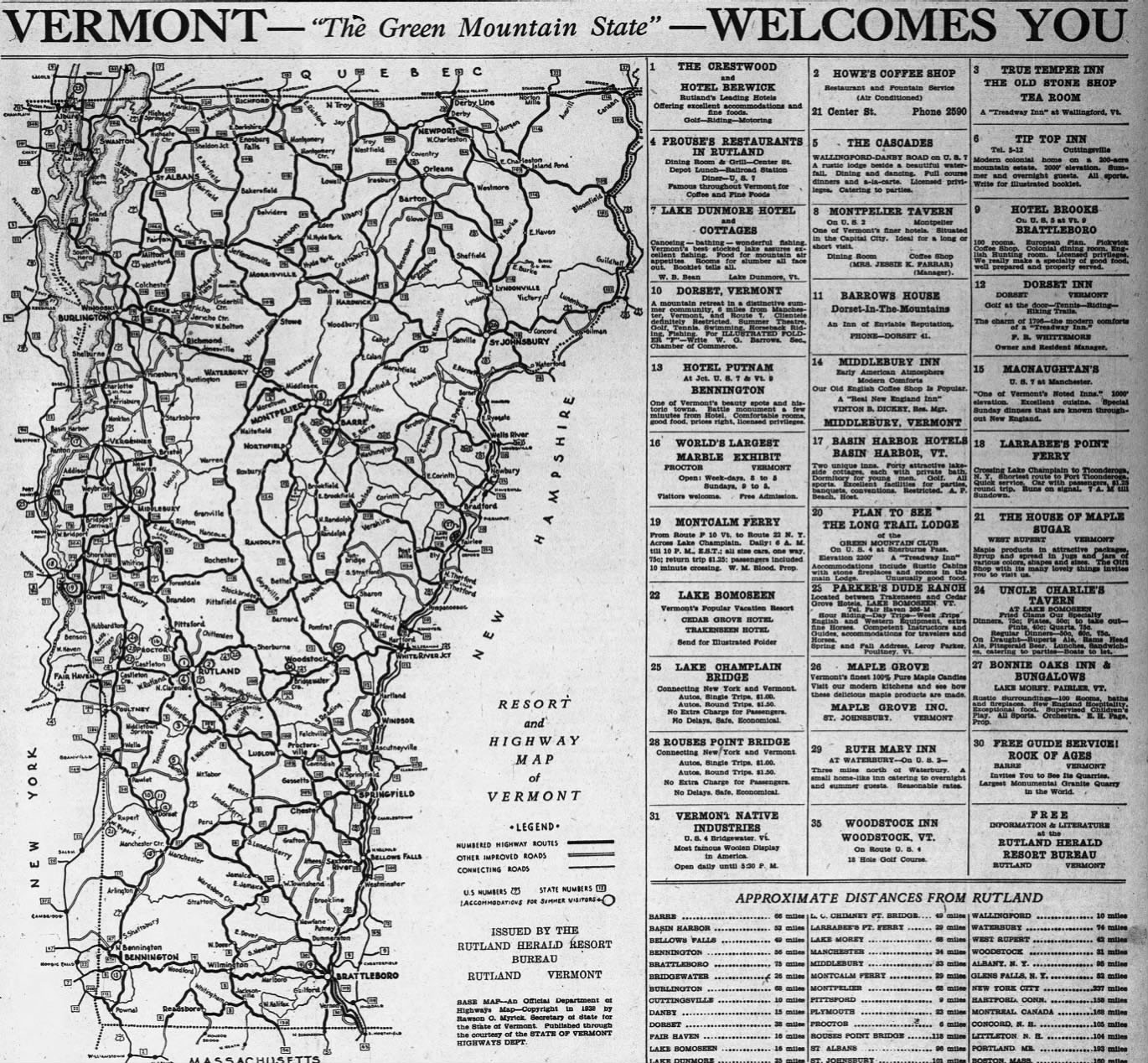
Seasoning Vermont: When Fall Became a Product

Originally published in the Times Argus/Rutland Herald Weekend Magazine on 10.16.21 in the “Remember When” column with the title “Falling for Vermont

Frank O. Duffy, a postal worker from Mattapan, Massachusetts, had been visiting Wallingford for more than 40 years. His friend, Patrick J. Muiry, of Boston, had “discovered” the town back in 1895. And now, the retired Mr. Duffy was staying at Maple Grove Farm for his annual October vacation. The foliage was, he told the Rutland Daily Herald, “as gorgeous as ever this year,” especially along the “back roads where October’s colors are gayest.”

It was 1937, and Vermont hadn’t long been a fall vacation destination. That is, until marketers decided it should be.

Continue reading

Vermont Eugenics, the Rutland connection

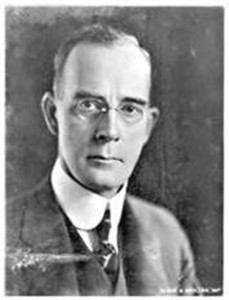
Prof. Henry Perkins. (UVM / photo)

Prof. Henry Perkins. (UVM / photo)

“One eugenical scheme to purify the state’s polluted protoplasm was bring in a better class of Vermonters — tourists and summer homeowners.”

What is one of the first things you notice when you cross the border back into Vermont? No billboards, right? What about the other features we take for granted: tourist information booths, great hiking trails, summer homes — many, many summer homes — cabins, cottages and even a few mansions. Yes, our tourist industry is one of the major things that keeps Vermont on the map. We have a brand that, thanks in part to various movie references across the decades, is known even internationally. And we are proud of it.

But what if I told you this tourist industry had racist and socially discriminatory roots? That even the construction of Route 7 and the improvement of other highways starting in the 1930s were to make our state more attractive and accessible to the “right” people”? Continue reading