Originally published in the Winter 2022 Rutland Magazine with the title, “Tumbling through Time.” (All photos taken by Joanna Tebbs Young)
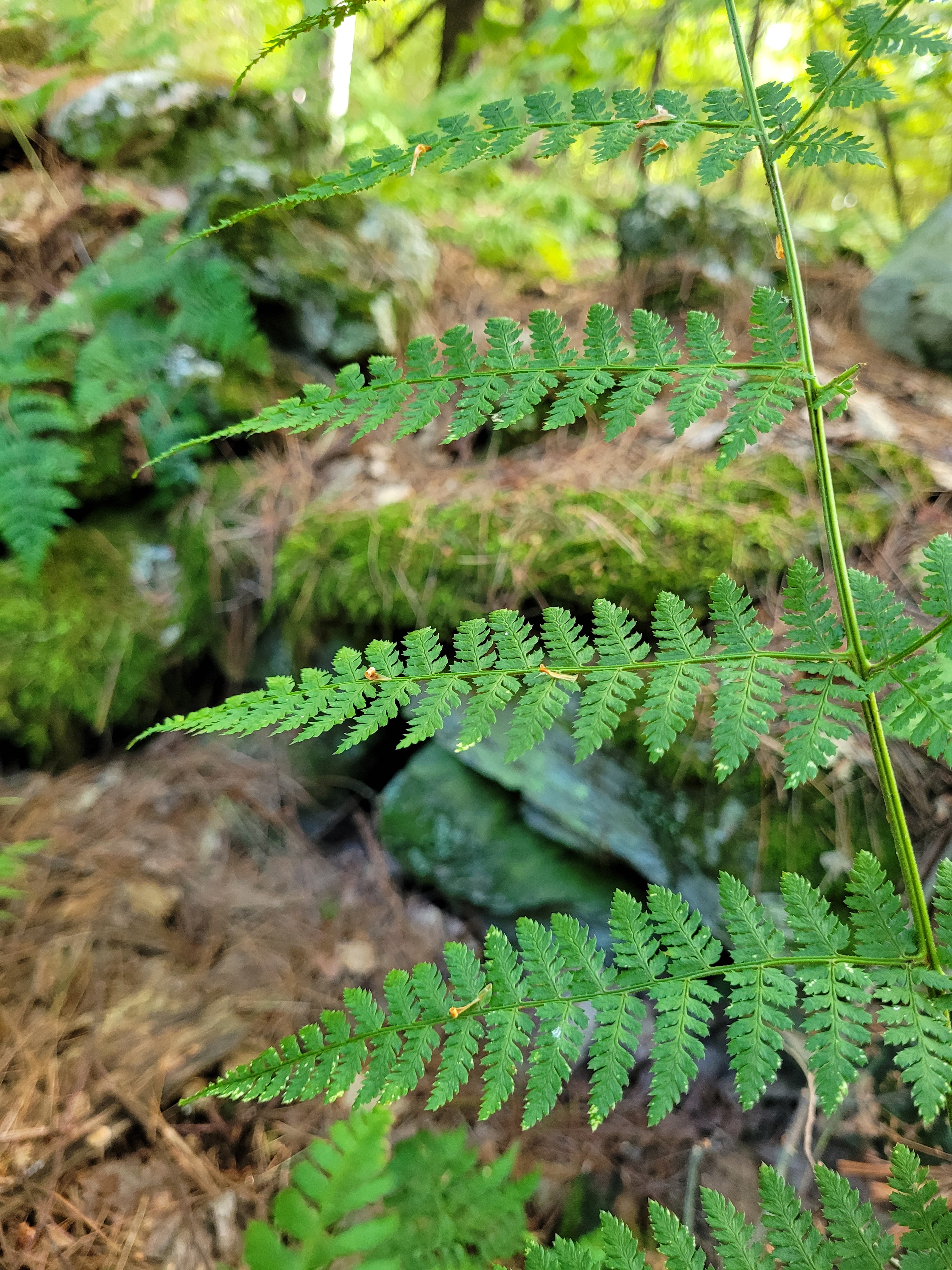
When I was teenager, my father was obsessed with old stone walls. Old Vermont stone walls, to be precise.
“There’s an old stone wall,” he’d say as he attempted to steer our 1979 maroon Pontiac ship-of-a-station wagon around the dried mud waves of some back road. We hadn’t long moved from England and many a weekend was spent exploring our new home state, which for my father meant turning down every dirt road we happened upon.
“Look at that old stone wall,” he’d say to no one in particular as my sister and I bumped and swayed on the beige spider-veined vinyl of the back seat.
“Oh, that’s a really old one.”
To humor him, I sometimes generously offered a “oh, yeeeaaah.” But seriously? A stone wall? Whoop-de-do.
~~
Thirty years later, my teenage son slouches in the back seat, straining against the tight seat belt as he tries to conform his length to our compact car. He is all hoodie, earbud cords, and legs. He begrudgingly joined this road trip only when bribed with promises of McDonald’s iced coffee.
We’re driving on a not-quite-dirt road near Shrewsbury, near Windsor, Springfield, Reading, hillside properties either side. The leaves are gone, the views are spectacular. Even in the brown-gray of November, Vermont awes. There are fields and there are woods, there are lawns and there are barns.
And there are old stone walls.
“There’s one!” I say. “Wow, that one really survived well!”
“And another one!
My husband obligingly acknowledges the tumble of rocks just visible in the tangled undergrowth. Silence from the back seat. Except for the rattle of ice cubes and scree-scree of a straw in a plastic cup.
“So, I know you don’t really care,” I say, glancing back at my son, “but I’m going to tell you about these walls anyway. We are surrounded by history and knowing it is important.”
“Aaaand, you never know…” I smile with mother-is-all-knowing-ness. “Maybe one day you’ll tell your kids about them.”
He peeks out from under his hoodie. “Yeeeaaah.”
~~
Vermont’s stone walls tell a tale of time. Not merely evidence of the immigrant and native-born farmers who settled here in the late eighteenth and early nineteenth centuries, these walls summon a far older story. The stones puzzle-pieced into these walls tell of a land that wasn’t always green, rounded, and rivered. Smoothed into craggy slabs and spheres over eons, these rocks are a reminder that long, long ago this land was created as retreating glaciers grazed granite mountains along their way. These stones, and the silt beneath them, are the literal bedrock of Vermont’s history and of the people who have chosen to call it home.
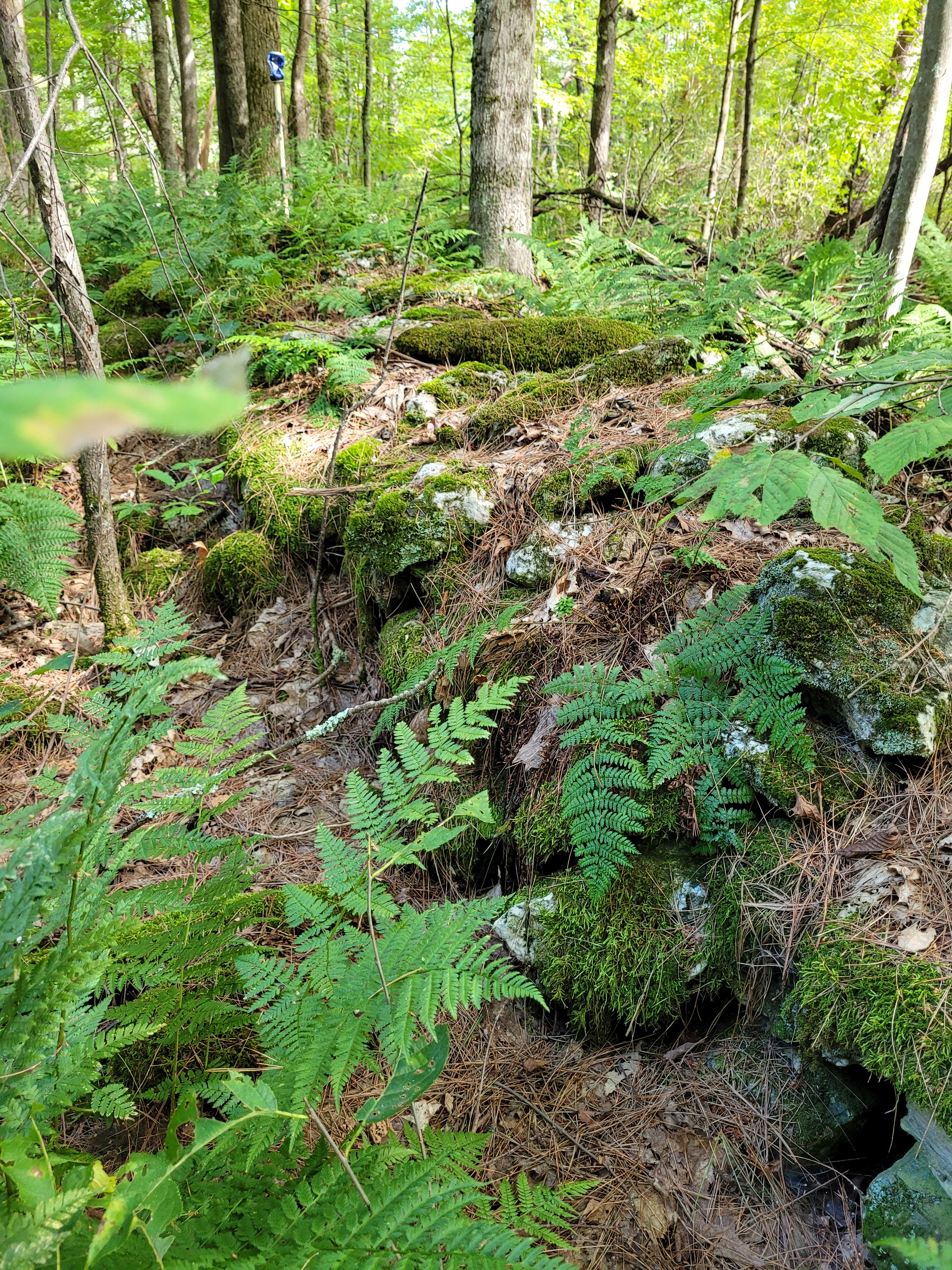
Geologist Robert Thorson estimates that most of New England’s stone walls, including Vermont’s, were constructed roughly between 1775 and 1825. As European settlers—the majority of English origin and from other parts of New England—moved north into Vermont, they cleared small patches of hillside on which to grow their own food and raise sheep. Trees were used for homes and barns and fences while surface stones were discarded around the fields’ edges.
After 1850, farmers began to increase their trade capability. As they diversified their crops and replaced sheep flocks with herds of cows, ever more land was cleared. By 1870, seventy-five-percent of Vermont’s arable land was laid bare. The combination of increased spring run-off, hooves, hoes, and frost heaves forced more deeply buried stones to the surface. These too were moved to the boundaries and either left in piles or, over a few generations, shaped into the works of art—American folk art, as Thorson regards them—the remains of which we can see today. That is, if we can find them.
After many farms were abandoned in the last third of the nineteenth century, hillside pastures and fields returned to woodland. Walls that may have once outlined an open field of wheat or corn or potatoes, now lie crumbling and deeply hidden in the trees not far from old cellar holes, apple trees, and wizened lilac bushes that once framed a farmhouse door. But walk the trails first trod by Vermont’s native Abenakis, Mohican, and Wabanaki, or drive the back roads where generations walked and rode and drove before us, if you are looking, you will see those that once edged the way.
~~
Five years after we moved to Vermont, my father got his very own stone wall.
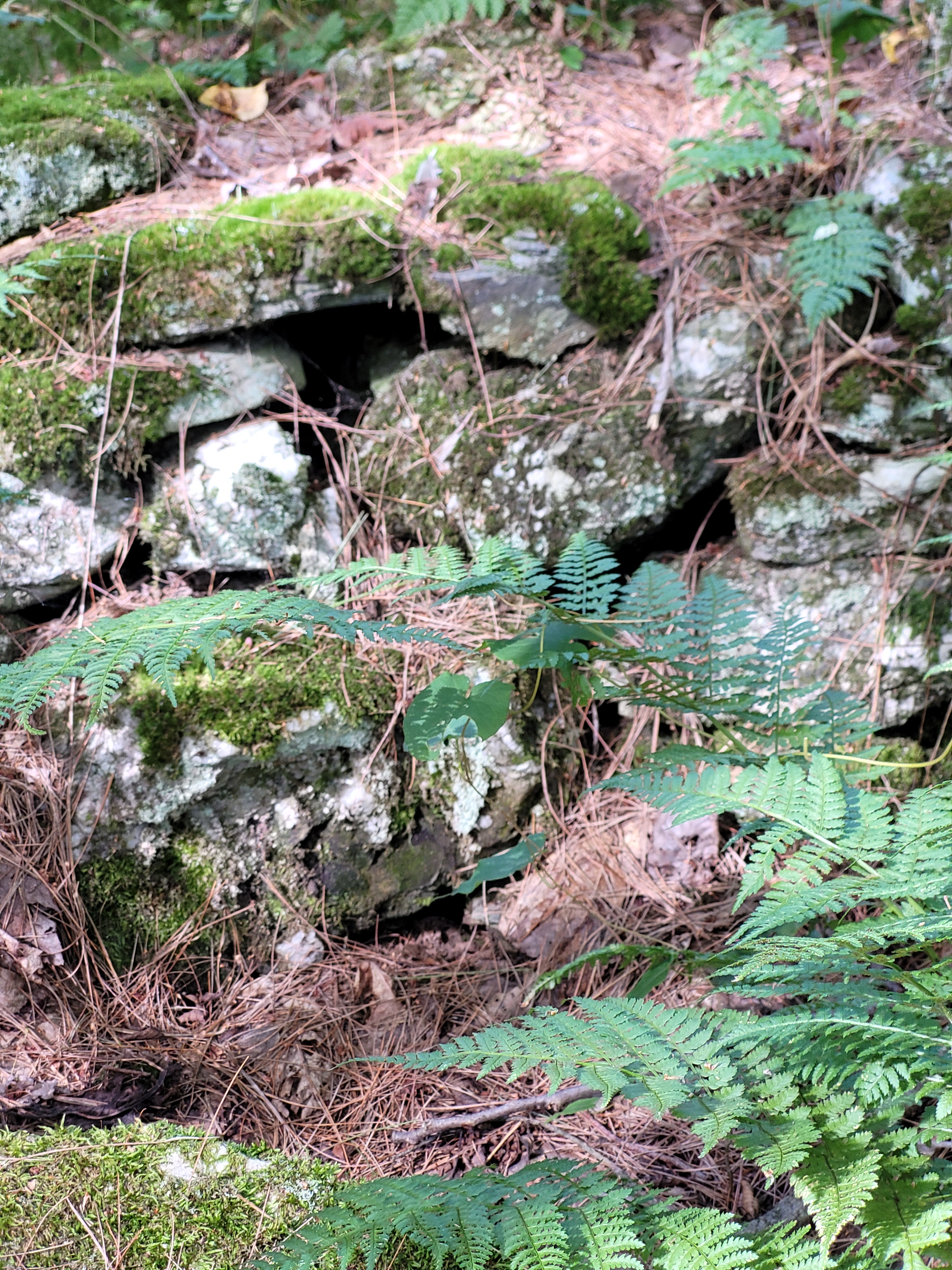
Like other old stone walls around the state, it’s very presence – at the end of a trail through the new-growth woods on my parent’s narrow strip of land that parallels Lake Bomoseen – tells a story: that where deer, bobcat, and bear (and even moose, my father insists) now hide among the trees and dense underbrush, emerging at night to drink at the water’s edge, sheep once grazed in an open meadow.
Before the trail grew over, as it has insistently done over the past thirty-plus years, the wall was far easier to find. Now, one has to walk almost half a mile through a maze of old and young, standing and fallen birch and ash and pine to reach it. The higgedly-piggedly line of granite peeking out from under pine needles and moss would be hardly recognizable as a wall if it weren’t for the few stones which have managed to remain stacked atop each other, placed there so carefully – artfully – by the callused hands of a Vermont farmer.
Almost two centuries later, the far less callused hands of my parents re-placed them. Embedding a selection of stones they carted out of the woods back into the earth, they transformed the meadow on which they built their home into an English-style garden. The stones now give definition to a rock garden which cascades each glorious Vermont summer with shrubs and flowers. Nearby, they form the sides of a fern-festooned pond, nursery to tadpoles and playground to bright orange salamanders. Dark, damp, and moss-covered, the rocks now seem as integral to this new landscape as they were to the ancient.
Immigrants reshaping the land once again.
Only the stones remain constant: silent witnesses to the cycles of time and the passing of generations, holding the shadowy memory of those who came before.
Like the glaciers that formed this state and the people who re-formed it, our presence here will also melt into the sea of time. Guests of this land, rolling, tumbling through time like stones on a hillside, we will leave our mark on our state for generations to come. Each of us a part of the landscape of the ages, each of us a part of our beloved Vermont, our stories in the stones left behind.
 Vermont When...
I have been watching the videos artfully produced by Brad Martin (Vermount Mountain Metal Detector VMMD). He shows us on YouTube the remains of past human activity that are described in this article. I couldn’t quite understand the forces and society who first farmed in the MOUNTAINS!? no less, but this article that he furnished to me offers a clue or two. Maybe you two should do a video together.