Before the cows, sheep ruled Vermont

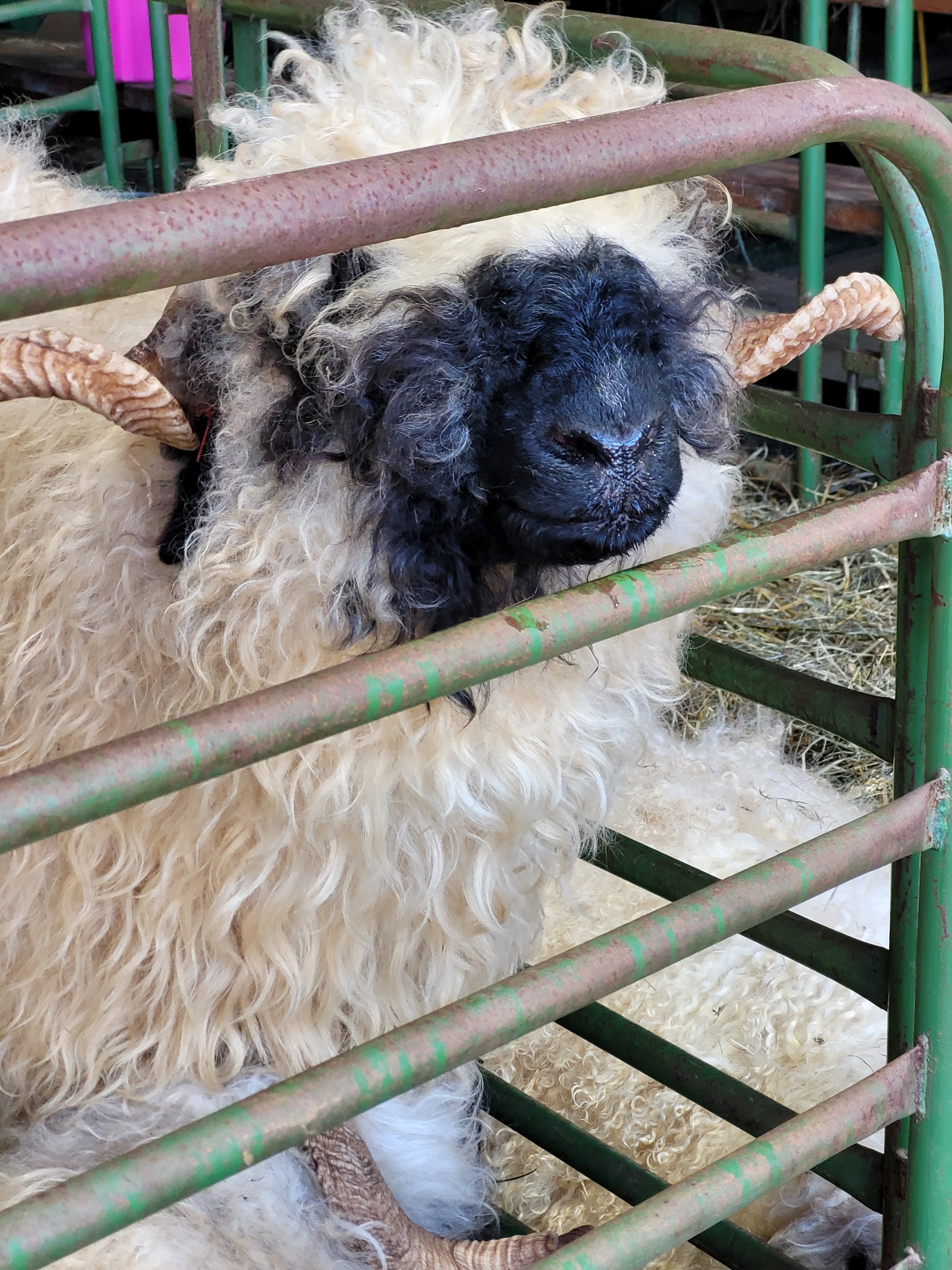
White wooly sheep with horns and a black nose peeking through the bars of a farm enclosure

A possible descendent of one of Vermont’s early sheep
herds at Tunbridge Sheep & Wool Festival.
Photo by Joanna Tebbs Young

(Originally published in the Rutland Herald/Times Argus “Weekend Magazine,” April 20, 2024)

Vermont’s short-lived wool industry was as rocky as the fields on which the sheep grazed and as up-and-down as its mountains.

Between roughly 1775 and 1825, European settlers — the majority of whom were of English origin from other parts of New England — were moving north into Vermont. Primarily subsistence farmers, they cleared small patches of hillside on which to grow their own food and graze English breeds of sheep which were raised for meat, not wool.

In 1809, the American Consul to Portugal, William Jarvis, imported 200 Merino rams from Spain. Merino wool was of higher quality than that of the English breeds — softer and more versatile. Its uniquely kinked fibers trapped more air and absorbed more water away from the skin, keeping the wearer warmer in the winter and cooler in the warmer months.

Moving to a farm in Weathersfield, Vermont, Jarvis eventually shipped 4,000 sheep to the U.S. He went on to breed and sell these to Vermonters, who, in turn, expanded their farming operations and began selling their wool to local mills.
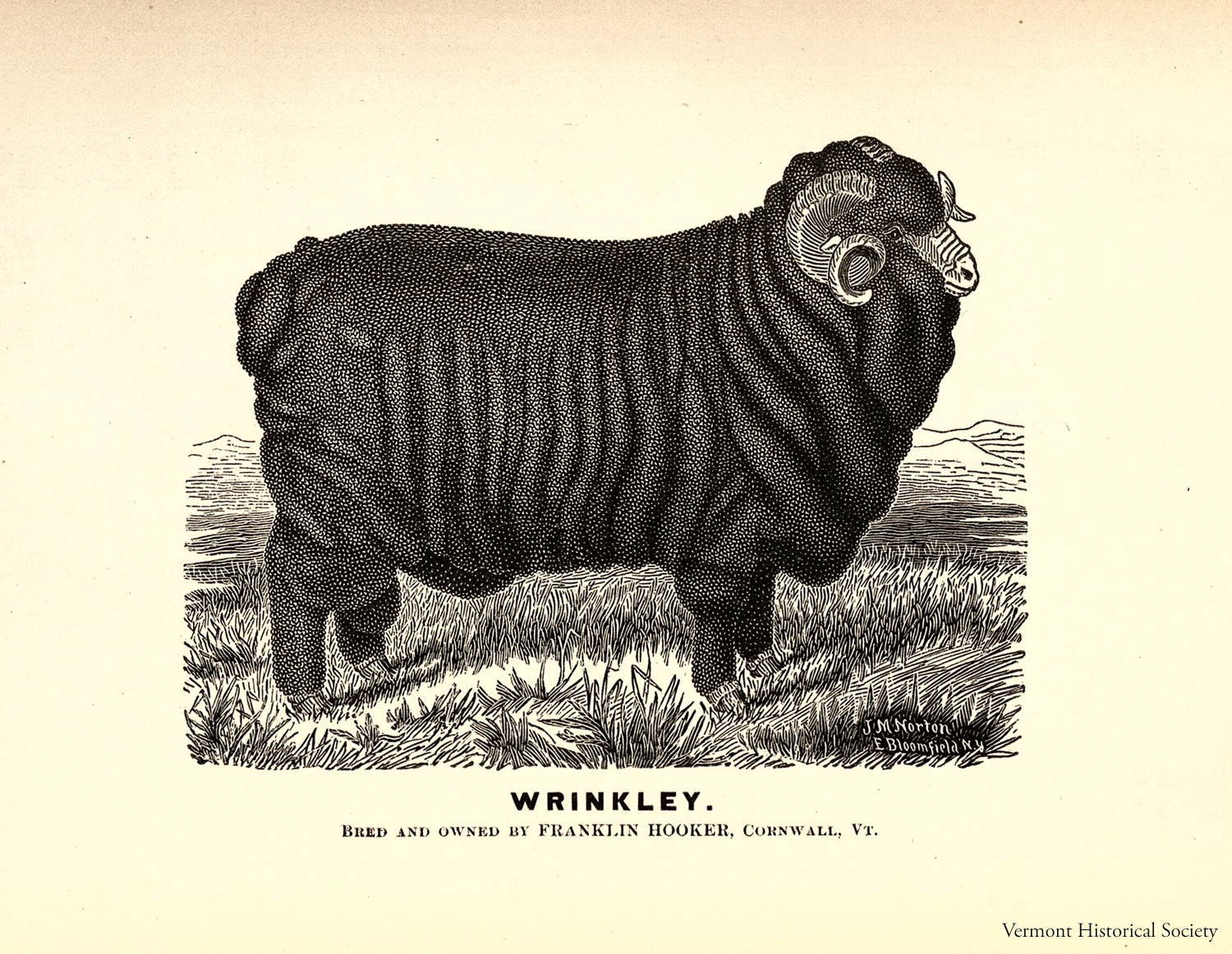
Engraving of a black wrinkled sheep from the early 19th century

Photo courtesy of Vermont Historical Society

During the War of 1812, demand for such wool rose as factories were commissioned to make uniforms, but then fluctuated over the following decade. By 1820, however, in part due to protective tariffs, mills were paying farmers well for their wool. Soon sheep farming was more profitable than dairy or crop farming. Farmers were replacing their cows with sheep at such a frenetic rate that between 1824 and 1840 the sheep population had quadrupled. According to records from the time, in 1837, Vermont was home to more than one-and-a-half million sheep, six sheep per resident. Every town in the state was grazing at least 1,000 sheep and some had over 10,000.

Continue reading and subscribe for free at joannawriteshistory on Substack…
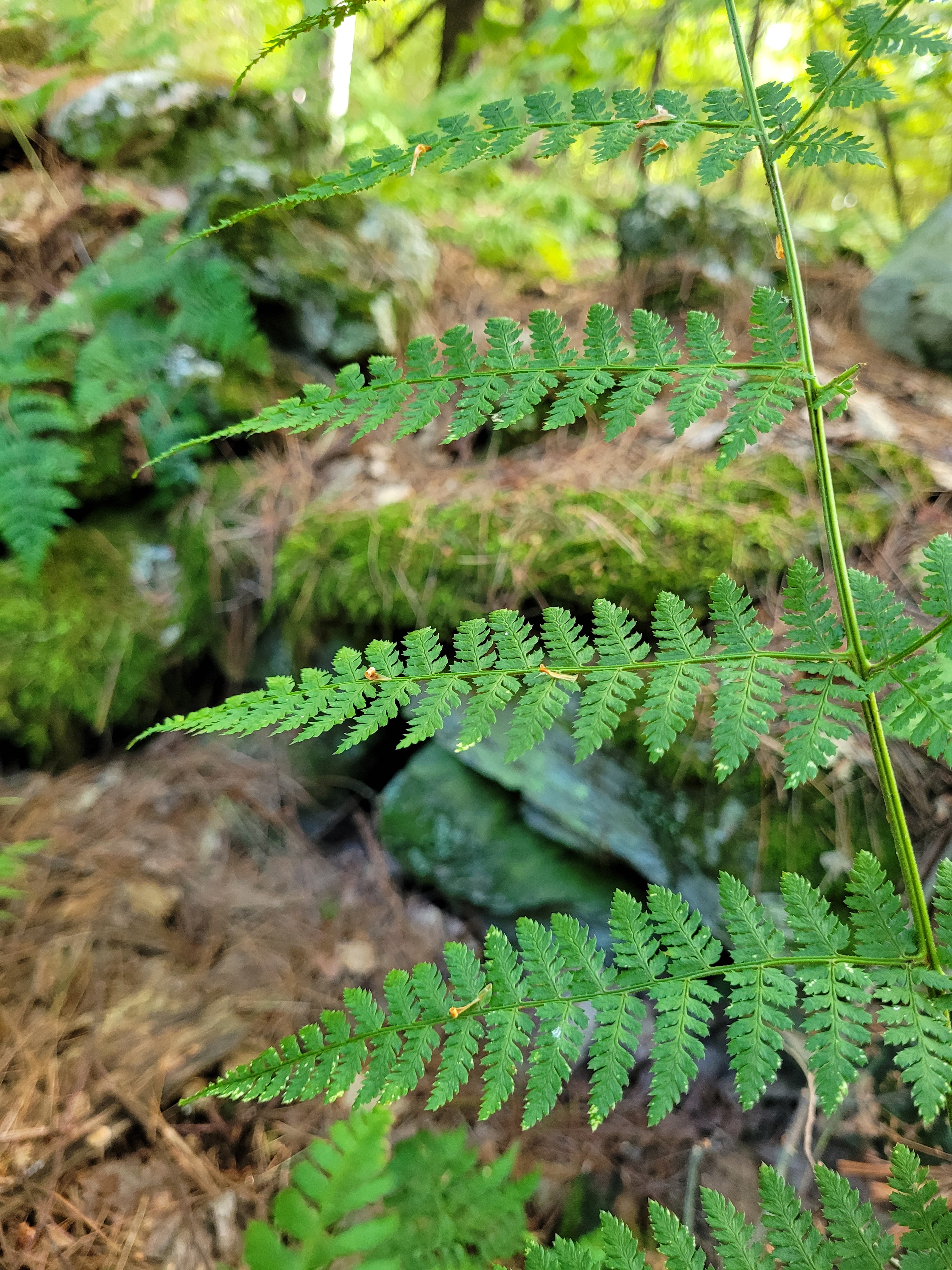
Stone Storytellers: The Stonewalls of Vermont

Originally published in the Winter 2022 Rutland Magazine with the title, “Tumbling through Time.” (All photos taken by Joanna Tebbs Young)

When I was teenager, my father was obsessed with old stone walls. Old Vermont stone walls, to be precise. 

There’s an old stone wall,” he’d say as he attempted to steer our 1979 maroon Pontiac ship-of-a-station wagon around the dried mud waves of some back road. We hadn’t long moved from England and many a weekend was spent exploring our new home state, which for my father meant turning down every dirt road we happened upon. 

“Look at that old stone wall,” he’d say to no one in particular as my sister and I bumped and swayed on the beige spider-veined vinyl of the back seat. 

“Oh, that’s a really old one.” 

To humor him, I sometimes generously offered a “oh, yeeeaaah.” But seriously? A stone wall? Whoop-de-do.

~~

Thirty years later, my teenage son slouches in the back seat, straining against the tight seat belt as he tries to conform his length to our compact car. He is all hoodie, earbud cords, and legs. He begrudgingly joined this road trip only when bribed with promises of McDonald’s iced coffee. 

We’re driving on a not-quite-dirt road near Shrewsbury, near Windsor, Springfield, Reading, hillside properties either side. The leaves are gone, the views are spectacular. Even in the brown-gray of November, Vermont awes. There are fields and there are woods, there are lawns and there are barns. 

And there are old stone walls. 

“There’s one!” I say. “Wow, that one really survived well!”

“And another one! 

My husband obligingly acknowledges the tumble of rocks just visible in the tangled undergrowth. Silence from the back seat. Except for the rattle of ice cubes and scree-scree of a straw in a plastic cup. 

“So, I know you don’t really care,” I say, glancing back at my son, “but I’m going to tell you about these walls anyway. We are surrounded by history and knowing it is important.” 

 “Aaaand, you never know…” I smile with mother-is-all-knowing-ness. “Maybe one day you’ll tell your kids about them.”

He peeks out from under his hoodie. “Yeeeaaah.”

~~

Vermont’s stone walls tell a tale of time. Not merely evidence of the immigrant and native-born farmers who settled here in the late eighteenth and early nineteenth centuries, these walls summon a far older story. The stones puzzle-pieced into these walls tell of a land that wasn’t always green, rounded, and rivered. Smoothed into craggy slabs and spheres over eons, these rocks are a reminder that long, long ago this land was created as retreating glaciers grazed granite mountains along their way. These stones, and the silt beneath them, are the literal bedrock of Vermont’s history and of the people who have chosen to call it home. 

Continue reading