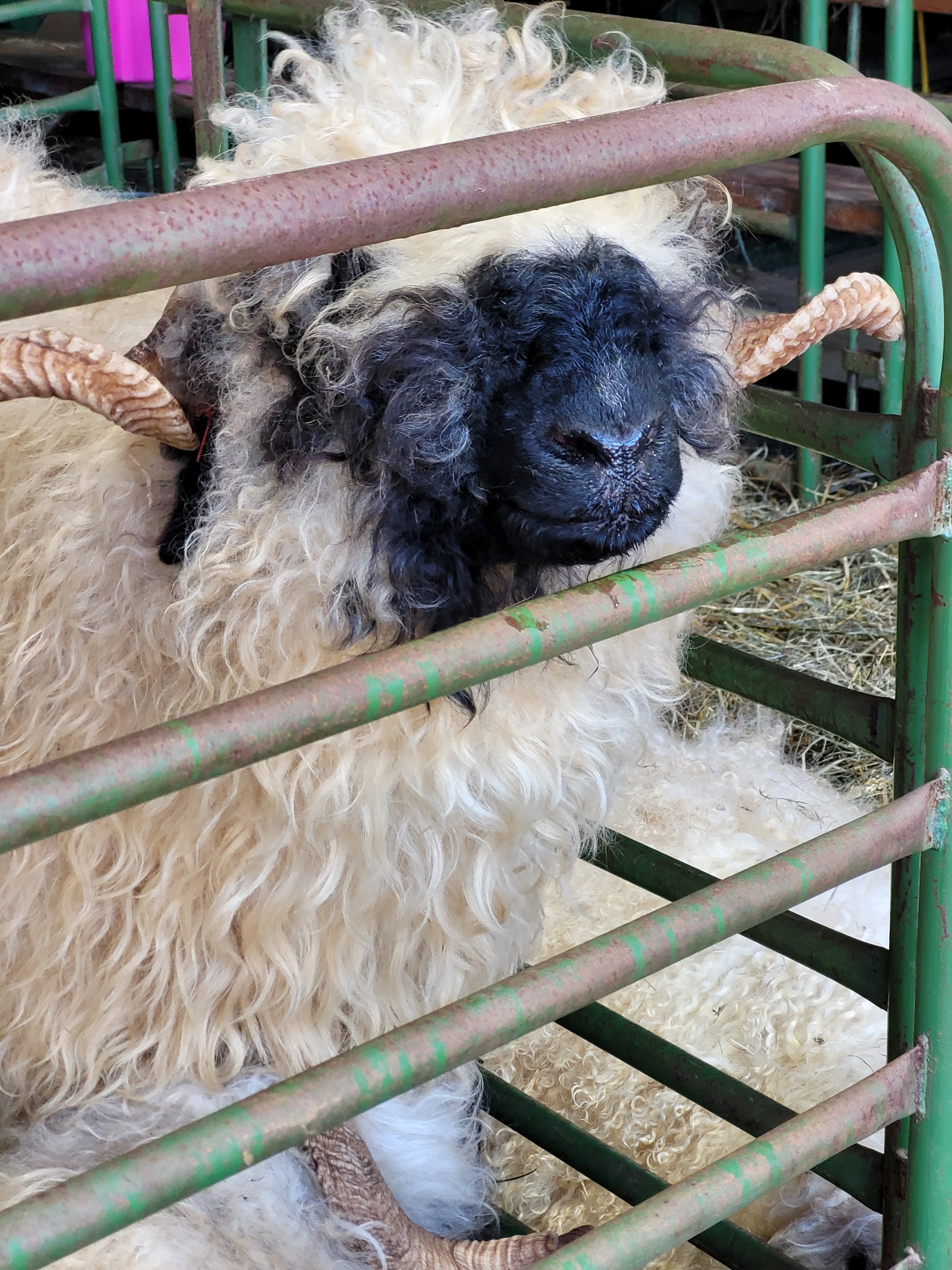
A possible descendent of one of Vermont’s early sheep
herds at Tunbridge Sheep & Wool Festival.
Photo by Joanna Tebbs Young
(Originally published in the Rutland Herald/Times Argus “Weekend Magazine,” April 20, 2024)
Vermont’s short-lived wool industry was as rocky as the fields on which the sheep grazed and as up-and-down as its mountains.
Between roughly 1775 and 1825, European settlers — the majority of whom were of English origin from other parts of New England — were moving north into Vermont. Primarily subsistence farmers, they cleared small patches of hillside on which to grow their own food and graze English breeds of sheep which were raised for meat, not wool.
In 1809, the American Consul to Portugal, William Jarvis, imported 200 Merino rams from Spain. Merino wool was of higher quality than that of the English breeds — softer and more versatile. Its uniquely kinked fibers trapped more air and absorbed more water away from the skin, keeping the wearer warmer in the winter and cooler in the warmer months.
Moving to a farm in Weathersfield, Vermont, Jarvis eventually shipped 4,000 sheep to the U.S. He went on to breed and sell these to Vermonters, who, in turn, expanded their farming operations and began selling their wool to local mills.
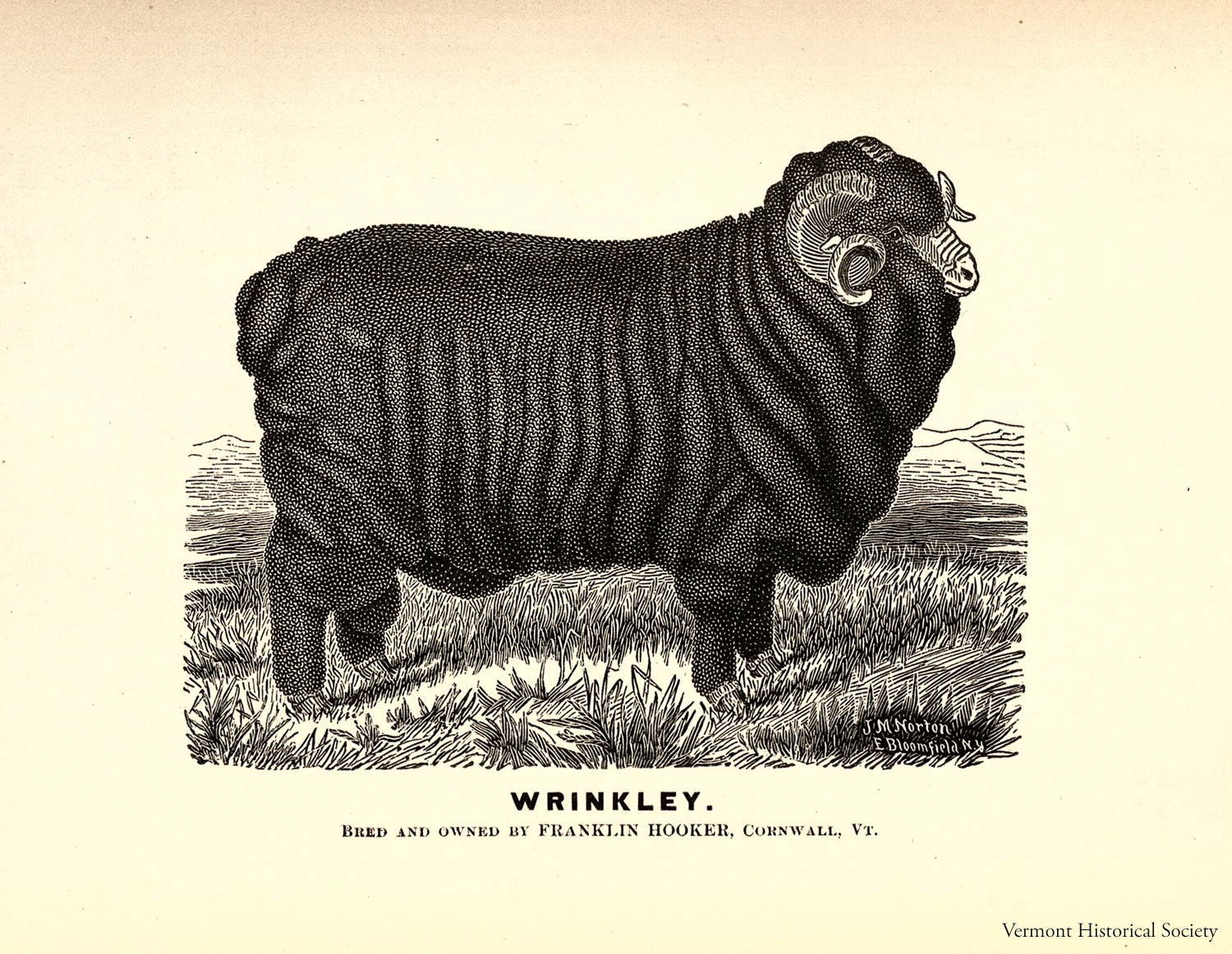
Photo courtesy of Vermont Historical Society
During the War of 1812, demand for such wool rose as factories were commissioned to make uniforms, but then fluctuated over the following decade. By 1820, however, in part due to protective tariffs, mills were paying farmers well for their wool. Soon sheep farming was more profitable than dairy or crop farming. Farmers were replacing their cows with sheep at such a frenetic rate that between 1824 and 1840 the sheep population had quadrupled. According to records from the time, in 1837, Vermont was home to more than one-and-a-half million sheep, six sheep per resident. Every town in the state was grazing at least 1,000 sheep and some had over 10,000.
Continue reading and subscribe for free at joannawriteshistory on Substack…

